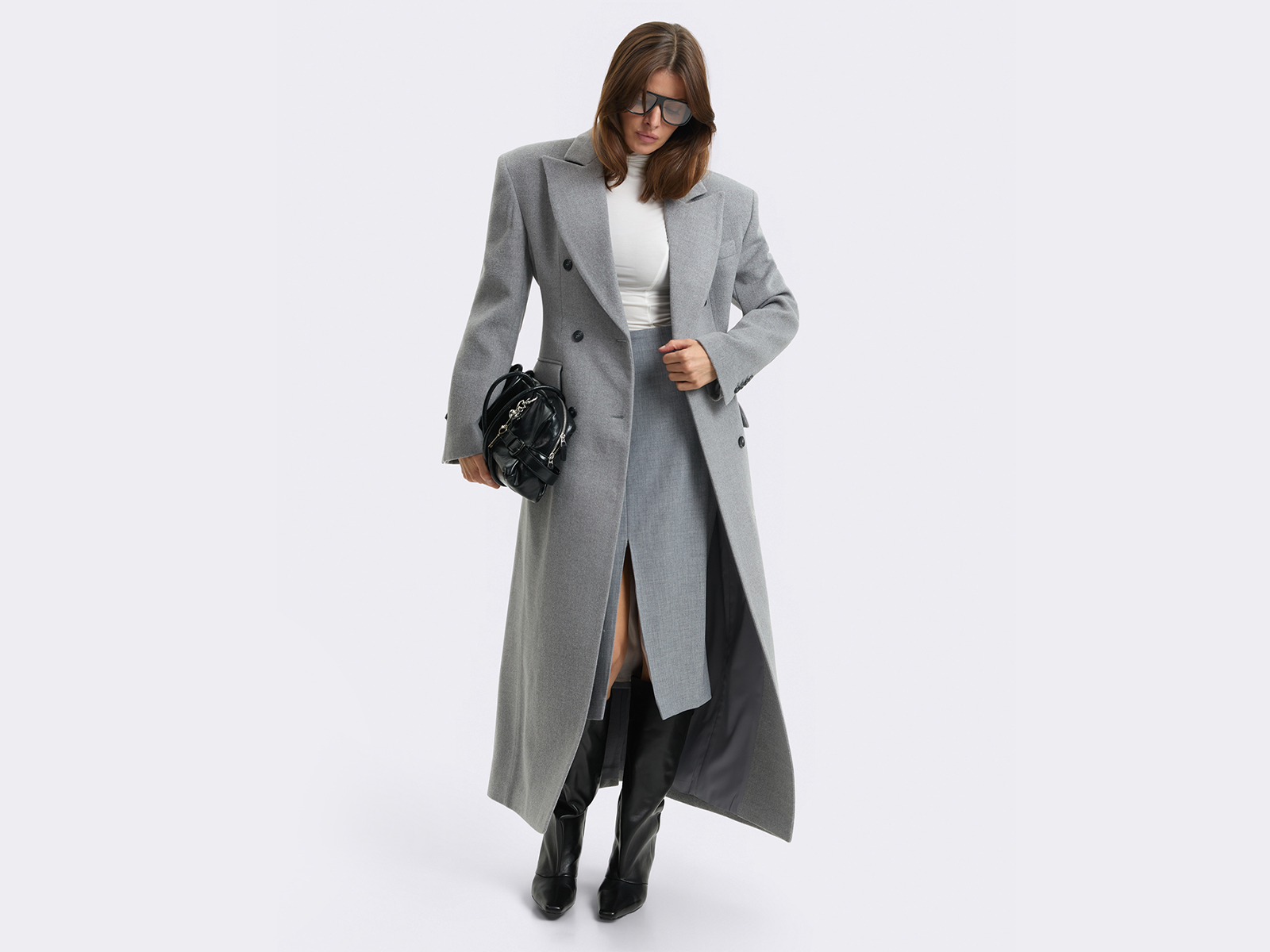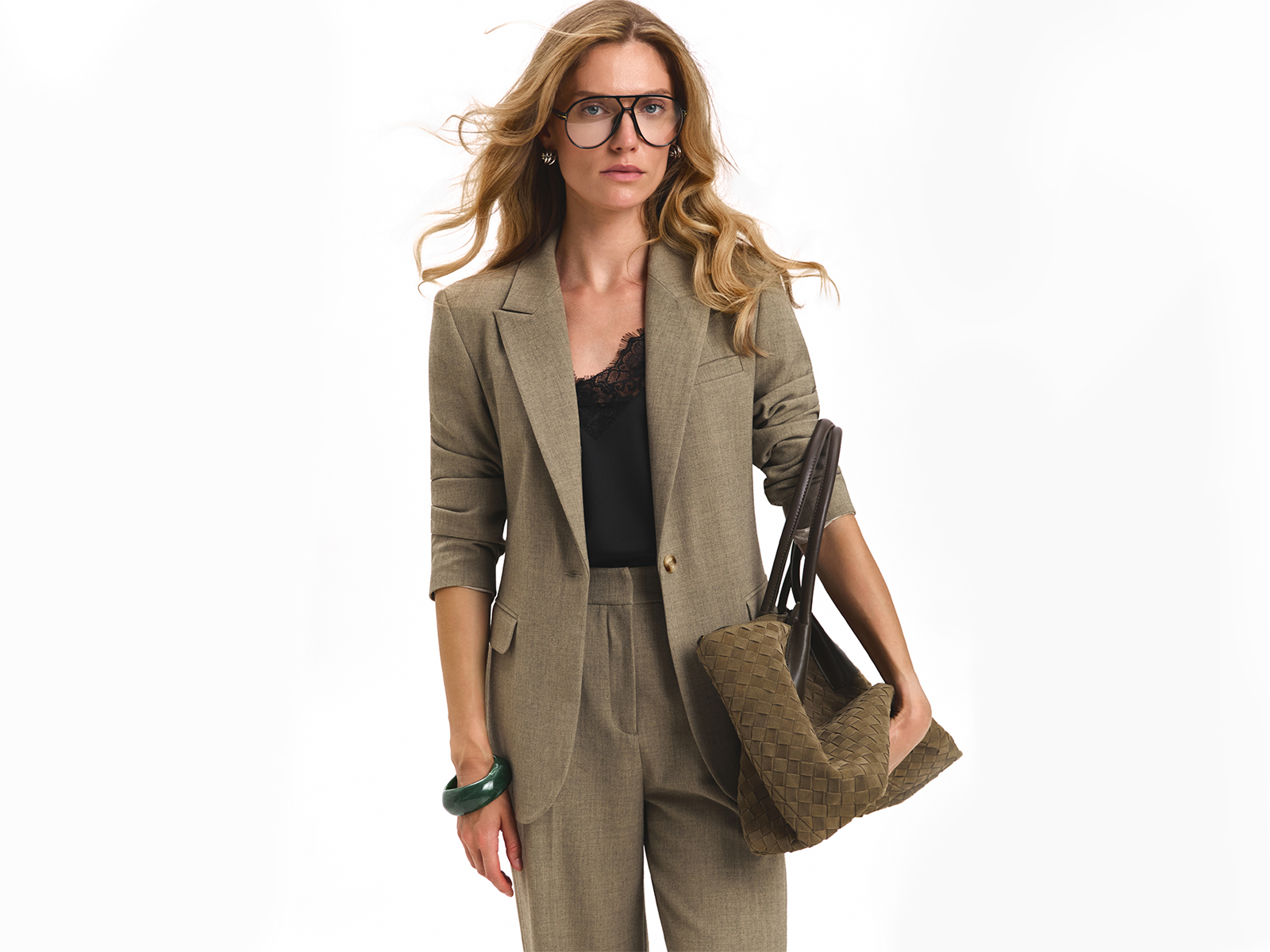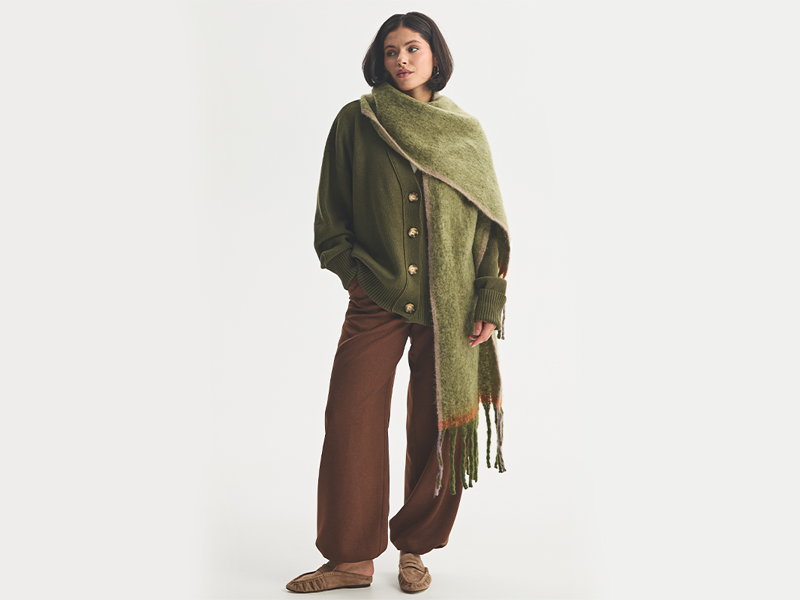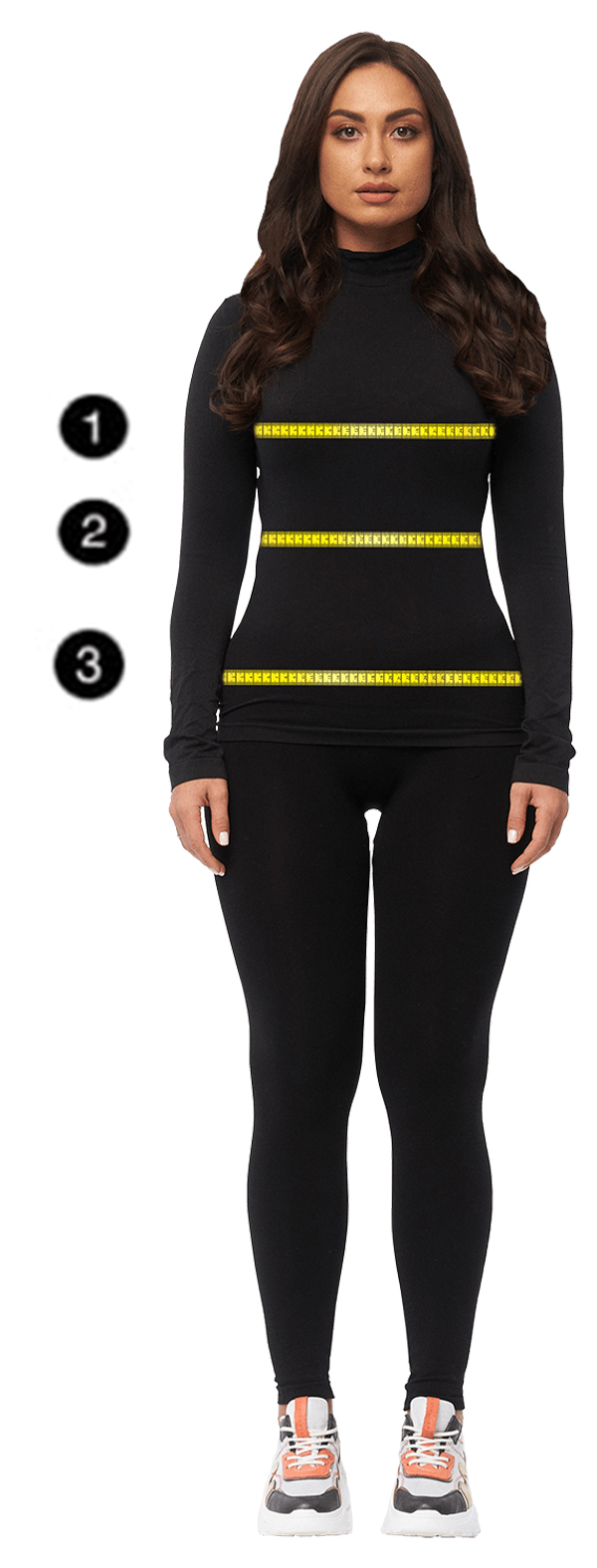
Some pieces stand out in an outfit. And some are the reason it comes together at all. The turtleneck is one of them.
It can stay almost unnoticed under a jacket, dress, or shirt, yet still change their character, seasonality, and level of formality. It adds polish to wide trousers, softens a strict suit, and makes a light dress right for a cold day.
A turtleneck is not just a first layer. It helps different pieces work together.


In Brief
- The turtleneck has come a long way from practical sportswear and workwear to a symbol of intellectual minimalism.
- A high collar shapes the line around the face and helps tie different elements of an outfit together.
- A thin turtleneck works best as a first layer, while a thicker one can be worn on its own.
- A turtleneck pairs with jackets, shirts, dresses, vests, and V-neck sweaters.
- Texture, weight, and fit matter no less than colour: they determine how the piece will work with other layers.
- When trying one on, pay attention to the collar, the stretch of the knit, the sleeve length, and how the piece behaves under outerwear.
- The versatility of a turtleneck lies not in going with everything, but in helping you wear familiar pieces in a new way.


From Sportswear to an Intellectual Symbol
The high collar did not appear in clothing for the sake of aesthetics. Its purpose was simple: to protect the neck from cold, wind, and chafing. Athletes, sailors, workers, and soldiers wore similar pieces. In the 19th century, the turtleneck became part of the polo players' uniform—hence the name polo neck.
Over time, practical knitwear moved beyond sportswear and workwear. In the 1920s, the turtleneck began to appear in the wardrobes of people in creative professions, and by the mid-20th century it had become a kind of alternative to the shirt and tie.
The black turtleneck was especially expressive. It kept the necessary restraint but did not demand a strict dress code. It was chosen by artists, writers, architects, and designers—people who did not need to show status through clothing, but had no intention of blending into the everyday either.
So a piece made to protect the body gradually became a way to state a position of one's own. Not necessarily a loud one. Rather, one independent of the general noise.
Later, the turtleneck took on new readings—from Parisian bohemia to tech minimalism. But its main advantage stayed the same: it combines function with a clean shape.


What a Turtleneck Changes in an Outfit
In autumn and winter, clothes rarely exist as separate pieces. We build an outfit in layers, and each one has to play its own role.
The turtleneck is responsible for the upper part of the silhouette. A high collar outlines the line around the face, fills the open area of the neck, and helps bring together pieces that might look random without it.
A jacket with a shirt is usually seen as a more traditional business set. The same jacket with a thin turtleneck becomes less formal, but does not lose its polish.
A dress with an open neckline takes on a different mood. A shirt that was worn on its own in summer can become a full outer layer in autumn.
A turtleneck helps to:
- balance a voluminous jacket or vest;
make a suit less formal;
- add a graphic touch to a monochrome outfit;combine pieces of different textures;
- extend the season for dresses, sundresses, and shirts;
- create a calm backdrop for jewellery or a complex cut.
Its strength is not in drawing attention, but in setting up the interaction between other pieces.


Thin or Thick Turtleneck: How to Choose
When choosing a turtleneck, it is easy to focus on the shade. Black, cream, grey, beige—each seems universal in its own way. But first it is worth deciding what role this piece will play in your wardrobe.
A thin turtleneck in smooth knit is, above all, a first layer. It fits easily under a jacket, shirt, dress, or sweater and barely changes the volume of the upper part of the silhouette.
A thicker model can be worn on its own. It already needs space: wide trousers, a loose-cut skirt, a voluminous jacket, or a coat. If you put it under a piece that already fits tightly at the shoulders, the outfit can lose its lightness.
A relaxed turtleneck with a soft collar creates a completely different impression than a thin ribbed one. The first adds ease, the second—clarity and a graphic line.
Colour works the same way. A black turtleneck emphasizes contours and creates a strong contrast. A cream or light beige one softens the outfit and adds light near the face. A saturated shade can become an accent, but does not have to be repeated in other details.
The main thing is not to make a turtleneck do another piece's job. A thin one should not imitate a sweater, and a voluminous one should not try to hide quietly under a fitted jacket.


Seven New Ways to Wear a Turtleneck
1. Under a jacket—not just for the office
A structured jacket sets the shape, and knitwear softens it. Try pairing a thin turtleneck with a tailored jacket and wide trousers. The set will look polished, but not too formal.
If you swap the trousers for a midi skirt, what changes is no longer the construction, but the tone of the outfit.
2. Under a dress with an open neckline
This trick lets you keep your favourite dress in rotation until spring. The turtleneck changes its mood: a light or evening piece becomes more casual, and sometimes even a little intellectual.
Contrasts work especially well: a smooth dress and textured knit, a light fabric and a thick turtleneck, a romantic cut and a restrained collar line.
3. Under a shirt
A thin turtleneck under a loose shirt creates layering without extra complexity. A cotton, wool, or flannel shirt becomes a full outer layer, while the turtleneck takes care of warmth and a clean line near the face.
The shirt should not be too tight, though. Layers should complement each other, not fight for space.
4. Under a vest
A tailored or knitted vest works especially well with a thin turtleneck. It fills the space underneath and creates a smooth transition between the shoulders and the upper part of the outfit.
cut or a distinctive texture, choose a smooth turtleneck. If it is as minimal as possible, you can play on a contrast of materials.
5. With a V-neck sweater
A turtleneck under a V-neck sweater is not just a way to stay warm. The high collar fills the open area and makes the layering feel complete.
This works especially well with thin knitwear and loose-fitting pieces. Layers that are too thick around the neck can add unnecessary volume.
6. With jewellery over the collar
A turtleneck does not necessarily compete with jewellery. Its smooth surface can be a backdrop for a long chain, a pendant, a brooch, or several thin charms.
Scale matters here. On a thick black turtleneck a small piece can get lost, while a large one creates a bold accent. It all depends on the texture of the knit, the height of the collar, and the overall construction of the outfit.
7. With pieces that usually stay in the warm season
A turtleneck lets you rethink the seasonality of your wardrobe. It works not only with dresses and shirts, but also with sundresses, sleeveless dresses, light vests, or jackets with cropped sleeves.
This does not mean any summer piece can be moved into the cold season mechanically. But sometimes one right layer is enough to give a familiar set new life.


How to Choose a Turtleneck: What to Check When Trying One On
A turtleneck seems like a simple piece, which is why its flaws are especially visible. You can't hide a poor fit behind a complex cut or decorative details.
First, check the collar. It should sit close to the neck without feeling tight. If you keep wanting to pull it away or adjust it, the piece is unlikely to become a favourite—however appealing it looked on the hanger.
Also important:
- Weight of the knit: is it sheer, and does it create extra folds?-
- Stretch: does the collar return to its original shape?
- Sleeve length: do the sleeves peek out from under a jacket or shirt where they are not meant to?
- Length: is it easy to tuck in, and does it bunch up at the waist?
- Quality of the fabric: is it prone to quick pilling?
- Fit under other pieces: do the jacket, dress, or shirt keep their silhouette?
A good turtleneck should not just fit under other pieces. It should keep their shape and make the combination feel natural.
This is how to look at turtlenecks in the Natali Bolgar autumn-winter collection: not as an extra element added to an outfit that is already complete, but as its structural base. They help build layering, combine different textures, and adapt familiar pieces to the cold season.


How a Turtleneck Helps Build Layered Outfits
Layering does not have to mean complicated combinations. Often one thin layer decides everything: it ties pieces together, adds warmth, and helps keep the silhouette.
A turtleneck is especially handy in this role: it covers the neck, needs no extra accessories, and can stay almost unnoticed. At the same time, it is important to watch volume and textures so that several layers do not turn into one dense construction.
You can read more about the principles of combining pieces in “Layering for Beginners: 5 Rules to Avoid Looking Bulky”.


Frequently Asked Questions About Turtlenecks
What to wear with a turtleneck in autumn and winter?
A turtleneck pairs well with jackets, shirts, vests, dresses, V-neck sweaters, and suit sets. The choice depends on its weight and its role in the outfit.
What is better under a jacket—a turtleneck or a shirt?
A shirt gives an outfit a classic feel and a clean vertical. A turtleneck makes a jacket less formal, creates a more graphic line near the face, and can be more convenient for layering.
How to choose a turtleneck to wear under a jacket?
Thin knitwear works best as a first layer, as it does not add extra volume at the shoulders and sleeves. When trying one on, check that the jacket does not pull at the armhole and keeps its shape.
Can you wear a turtleneck under a dress?
Yes. A thin turtleneck pairs well with sleeveless dresses or models with an open neckline. The contrast of textures and weights helps create a more interesting outfit.
Which turtleneck colour is the most versatile?
Black, cream, grey, and beige are easy to combine with different pieces. But versatility depends not only on colour, but also on how the turtleneck works with the palette of your wardrobe.


A Piece That Leaves Room for Style
A turtleneck does not require complicated styling decisions. But that does not mean it lacks character.
It can be almost invisible or become the main accent. It can calm a bold outfit or, on the contrary, add a graphic touch. It can make a suit softer, a dress more practical, and a familiar set completely different.
Its versatility is not in going with everything without exception. It is in helping the pieces already in your wardrobe sound new.
Sometimes you do not need a new outfit formula for that. It is enough to change the first layer.