Outside, it's +35°C. In twenty minutes — the first meeting. Ahead lies a full day shuttling between air-conditioned meeting rooms, scorching streets, the car, the office, and the commute home. And if the dress code is strict enough — sheer tights too, impossible to escape even in July.
Every summer, the office wardrobe goes through its own small crisis.
You want lightness, but professionalism is still non-negotiable. And every year we ask the same question again: can you look put-together without feeling like your clothes are working against you?
In truth, the problem is almost never the heat.
It's that we still picture the office wardrobe the way it was created more than a hundred years ago — for a different climate, a different pace of life, and a completely different idea of work.


Why the Office Suit Was Never Made for Summer
The classic business wardrobe wasn't born in Milan or Paris.
It was shaped by the 19th-century British suit — restrained, layered, and practical for a cool climate. That suit went on to become the foundation of corporate culture, first in London, then in New York. Professionalism, the thinking went, had to look serious — and serious meant dark, covered, and as restrained as possible.
There's just one problem. These rules were never written for July. And certainly not for a city where you have to walk several blocks under a blazing sun in the morning, then sit down for an important meeting an hour later.
That's exactly why the modern summer office wardrobe isn't an attempt to break the dress code. It's its natural evolution — no less professional, but considerably smarter.


Lightness Doesn't Mean Lack of Seriousness
This might be the biggest myth about office dressing.
For some reason we still think authority has to be black, and professionalism has to be strict.
But good style almost never works through color. It works through form.
That's why light shades often look even more convincing than traditional black in summer. Milk white, butter yellow, sage green, sky blue, or soft beige don't make a look any less businesslike. They simply strip away the unnecessary weight.
This is, in fact, how many European offices have long operated. They've grasped a simple truth: professionalism doesn't require visual severity. It requires appropriateness.


It's Not the Fabric That Makes an Outfit Comfortable
The first piece of advice you usually get in summer goes something like: "Choose linen."
And it's only half true. Fabric composition matters, but the construction of the garment matters even more.
A well-cut jacket in a blended fabric is often more comfortable than a stiffly fitted linen blazer. A loose silhouette works better than an overly fitted one, and the absence of extra details can sometimes create more of a sense of coolness than the material itself.
That's why a good summer wardrobe is built not around specific fabrics, but around pieces that genuinely work in motion.
A vest instead of a jacket. A structured shirt instead of an elaborate blouse. A light suit that holds its shape without weighing you down. These are the choices that outlast not just a season, but the trends themselves.


Bare Skin and Lightness Aren't the Same Thing
Another summer trap is assuming less fabric automatically means more comfort. In reality, it's the opposite.
Lightness isn't created by a deep neckline or bare shoulders. It's created by the air between your body and the fabric.
That's why a loose-cut dress is often more comfortable than a fitted sundress, and wide-leg trousers are cooler than skinny jeans.
In a good summer wardrobe, it's not exposure that does the work — it's space. And that's exactly what lets you look professional without sacrificing comfort.


The Summer Office Isn't Just a Set of Separate Pieces. It's an Entire System.
Perhaps the biggest shift to transform the office wardrobe in recent years is that it stopped operating on the principle of the "complete outfit."
We used to buy a suit, a separate skirt, a separate blouse. Each piece existed on its own. Today, a different approach works far more effectively and interestingly — the capsule.
It's a handful of carefully considered pieces that mix and match easily, sparing you the question every morning: "What should I wear?"
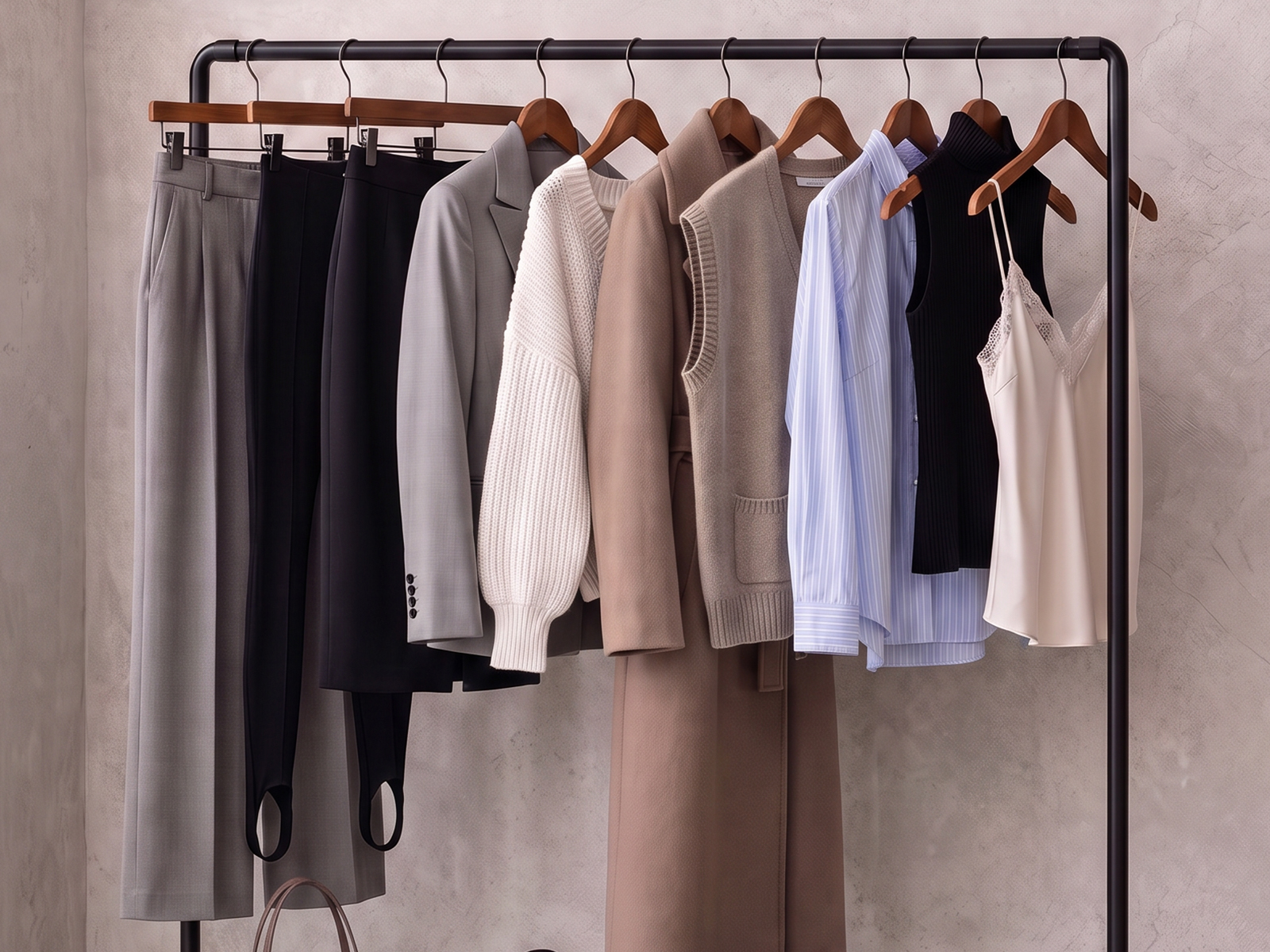
That's why structured suits, vests, wide-leg trousers, understated midi dresses, and loose-cut shirts are especially relevant in summer. These pieces let you shift the mood of a look without a complete wardrobe overhaul.
A vest easily replaces a jacket in the heat. A light shirt works as a second layer in an air-conditioned office. And the same suit can take you from a morning meeting straight through to dinner — all it takes is changing your shoes or jewelry.
That's what real functionality comes down to. Not the number of pieces, but the number of possibilities they create.


When Summer Changes the Office Palette
For a long time, the office was associated with black, navy, and gray. As if seriousness dictated its own palette.
But summer reminds us every year: a professional wardrobe can be light without losing its impact.
This is exactly the idea behind the Summer Office '26 collection. At its core are pieces that keep pace with your workday even on the hottest days: suits in linen, nettle fiber, and modern blended fabrics, vests, wide-leg trousers, light dresses, and structured shirts.
The palette speaks the language of summer too: butter yellow, sage green, milk white, sky blue, warm beige.
These are colors that don't create unnecessary severity. They add lightness to a look while keeping it polished and professional.
This is what the modern office wardrobe looks like today — confident, without performative severity.


What a Good Office Wardrobe Really Says
Sometimes it seems like office style is just a set of rules.
Covered shoulders, the right length, appropriate shoes. But in reality, these are only surface expressions.
A good wardrobe always speaks to something else. Respect for yourself. For the people you work with. For the space you walk into every day.
That's exactly why a professional look shouldn't look strict. It should look natural — without the sense that you had to choose between comfort and status, or between ease and professionalism.
Summer doesn't cancel out the business wardrobe. It simply reminds us: professionalism today can be light, considered, and comfortable.
And perhaps that's exactly the kind of wardrobe that stays with us the longest — the one that lets you think about your work, not your clothes.