Travel is one of the most honest tests a wardrobe can face. At home, a piece can hang in the closet for years, quietly maintaining the illusion that it's essential. In a suitcase, everything becomes clear very fast: if a pair of trousers demands "that one" blouse, a dress needs its own separate pair of shoes, or a top only works with one outfit, each of those quirks takes up very real space in your carry-on.
That's probably why we so often pack too much for a trip and end up wearing about half of it. We build the suitcase outfit by outfit: this for day one, this for dinner, this for the excursion, and this "just in case." That last character is especially dangerous. It usually travels the most and gets worn the least.
Let's try it differently: instead of packing ten outfits, pack seven pieces that ten outfits can grow out of.


There was a time when travel meant packing an entire wardrobe
Back in the late 19th and early 20th centuries, well-off travelers set off with large steamer trunks, and later with so-called wardrobe trunks. These cases opened vertically and essentially became portable dressing rooms: drawers on one side, hanging compartments on the other, and in some models even a shoe rack, a mirror, and dedicated boxes for accessories. Trips lasted weeks or months, and clothing was far more elaborate in construction, so the idea of literally bringing a piece of your wardrobe along didn't seem excessive at all.
Today, one of the symbols of comfortable travel is the opposite kind of luxury — walking past the baggage carousel with nothing but a single carry-on.
Travelers once tried to bring their whole wardrobe with them. Now, a well-thought-out wardrobe lets you bring almost nothing extra at all.


Don't plan outfits by the day
One of the most common mistakes when packing a suitcase is thinking in terms of a calendar. Monday, one outfit. Tuesday, another. Dinner, a third. Seven days quickly turn into seven separate outfits, each existing entirely on its own.
A stylist thinks differently. Not "what will I wear on Tuesday?" but "how many different scenarios can each piece carry?"
It's the same logic we discussed in our earlier article "Wardrobe Math": a wardrobe doesn't work because of how many pieces are in it, but because of how many connections exist between them. On a trip, that math becomes especially visible.
If three tops pair with two bottoms, that's already six basic combinations. Add a dress that works alone and layered, a jacket, a shirt worn as an overlay, and a few accessories — and seven pieces stop looking like a limitation.
So a good travel capsule doesn't start with the question "how much should I pack?" but with "how many lives will each piece live?"


Seven pieces the stylist recommends
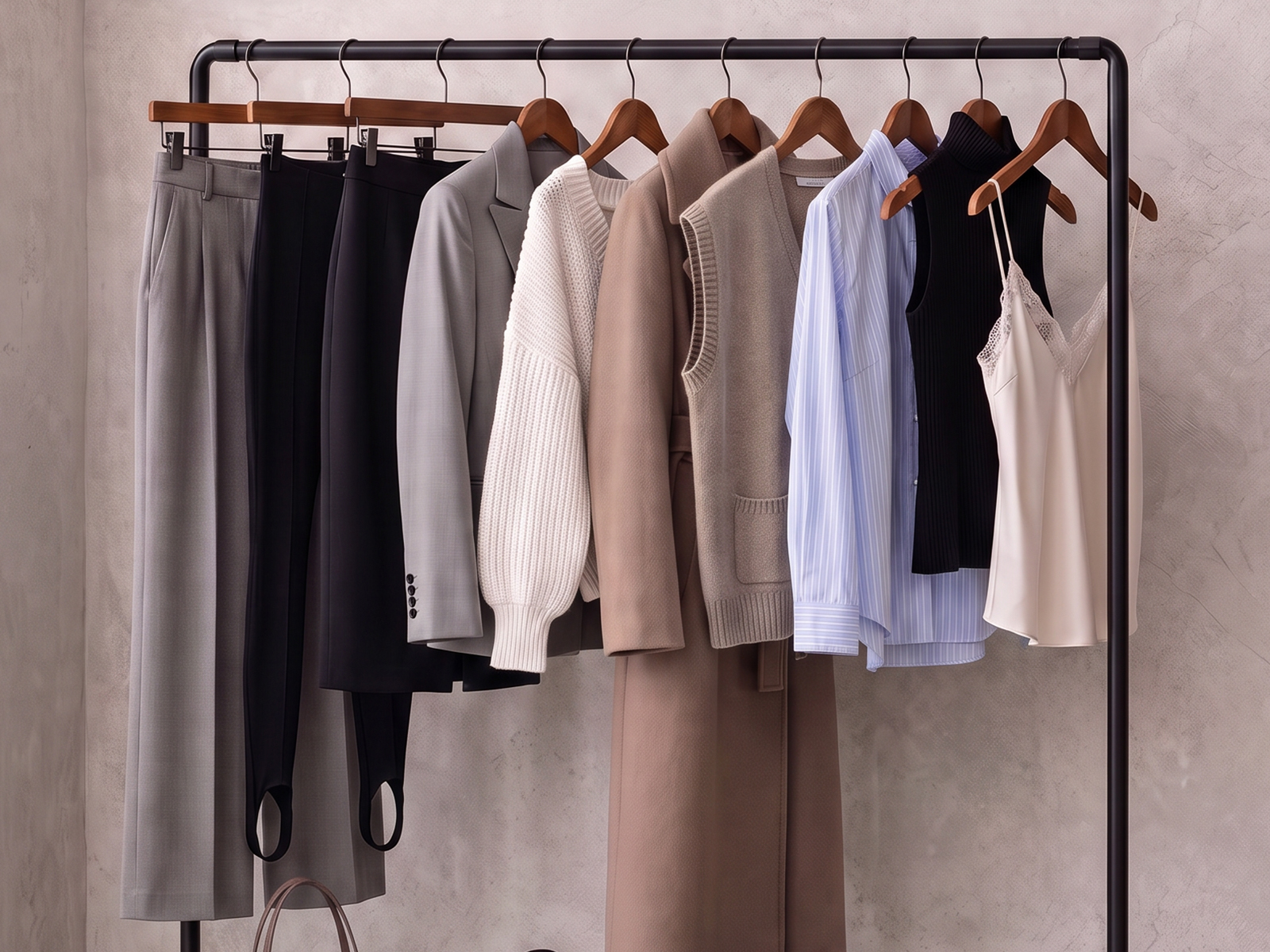
Natali Bolgar stylist Anastasia put together a capsule with no accidental passengers. Every piece does several jobs, and together they create more than ten outfits — without having to haul half your closet along.


1. Basic light-colored trousers
A straight or relaxed cut — the kind of piece that can spend the day in the city, hold up through a long walk, and end up at a restaurant table by evening, with only the top and accessories changing.
Light trousers pair with a T-shirt, a top, a shirt, and a jacket. That's already at least four obvious scenarios from a single piece. This is exactly how suitcase space should be calculated.


2. A versatile shirt
White, blue, or striped. But what matters more than color is how many roles it can play.
"A shirt can be worn as a top on its own, as a layering piece, or as a light cover-up. It pulls together even the simplest outfit," Anastasia explains.
Morning — with trousers. Daytime — unbuttoned over a top and shorts. Evening — over a dress, if it turns cooler. One shirt, three different jobs.


3. A basic T-shirt
A white, cream, or grey T-shirt might not be the flashiest item in your wardrobe. And that's exactly why it's one of the most useful.
It pairs perfectly with trousers, shorts, or bermudas, and makes a great base under a shirt or jacket. It's the neutral foundation around which any outfit can easily be built.
In a well-built capsule, not every piece needs to turn heads. Some pieces are there simply to do their job flawlessly.


4. A top or camisole
In the heat, it's a top on its own. In a cooler space, it's a base layer under a shirt or jacket. In the evening, it becomes part of a more polished look with light trousers and jewelry.
A top adds versatility to the capsule with almost no extra space. For a carry-on, that's especially favorable arithmetic.


5. Shorts or bermudas
An extra bottom changes the proportions of the whole capsule. The same T-shirt, top, and shirt look more polished with trousers, and more relaxed with bermudas or shorts.
Anastasia advises choosing a style that pairs easily with all three tops. That way, one extra bottom creates several new outfits at once, not just one standalone look.


6. A slip dress or a simple midi dress
At first glance, a dress seems like the exception to the rule of combinations. Yes, it's already a complete look. But a good dress doesn't stop there.
By day, with sandals. By evening, with jewelry and a compact bag. On top, you can add a shirt, jacket, or cardigan and change not just the temperature but the mood of the outfit.
Even a self-sufficient piece in a travel capsule needs to be able to hold a dialogue with the others.
7. A light jacket or cardigan
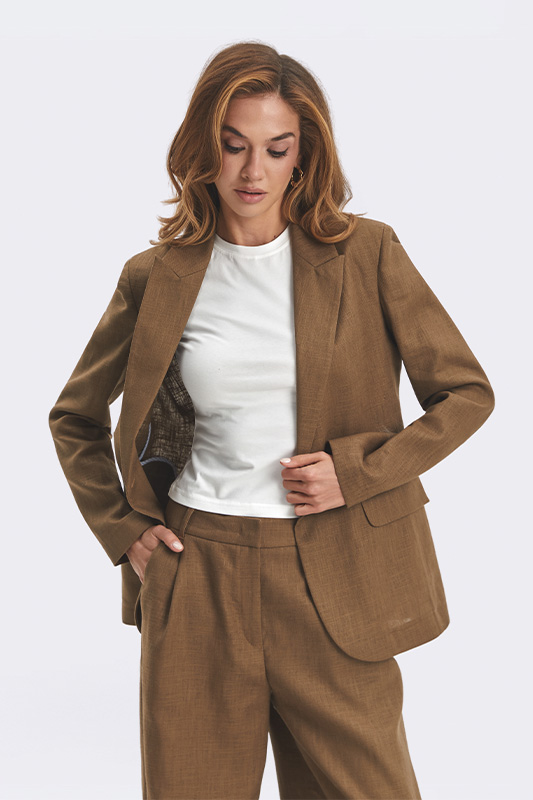
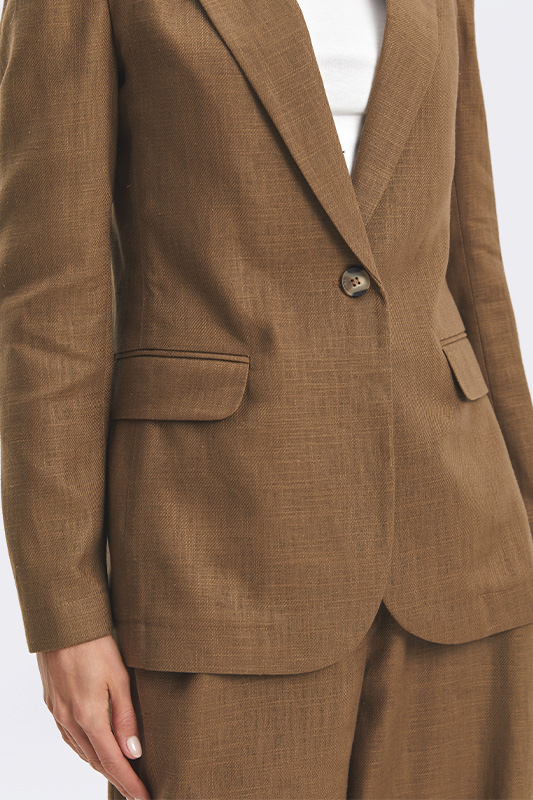
A summer trip almost never consists of summer temperatures alone. A plane, air conditioning, a cool evening, a terrace by the water — you'll need a top layer more often than you think while packing.
A jacket pulls together a T-shirt-and-trousers outfit, works with a dress, and adds structure to a shorts or bermudas look. A cardigan gives a softer effect but does the same job: it unifies the capsule and adapts it to changes in temperature.


Now, the math
From these seven pieces, more than ten outfits come together easily:
1. light trousers + T-shirt;
2. light trousers + top;
3. light trousers + shirt;
4. light trousers + T-shirt + jacket;
5. light trousers + top + shirt as a second layer;
6. shorts or bermudas + T-shirt;
7. shorts or bermudas + top;
8. shorts or bermudas + shirt;
9. shorts or bermudas + top + an unbuttoned shirt;
10. the dress on its own;
11. dress + shirt;
12. dress + jacket or cardigan.
And that's without even counting a belt, jewelry, a change of shoes, or the different ways to style the shirt itself.
This is exactly where it becomes clear why seven pieces can give you more freedom than fifteen random ones. **A good capsule doesn't limit your choices — it removes what stands between you and them.**


Accessories take up little space. But they change the context
The same dress with sandals and sunglasses reads as a daytime look. With jewelry and a compact bag, it's already an evening one. A T-shirt with trousers and sneakers works for a long walk, while with a belt, a jacket, and loafers, it's an entirely different scenario.
That's why Anastasia recommends adding a belt, sunglasses, a compact bag, and jewelry to the capsule, and limiting footwear to two versatile pairs — sandals and sneakers, or loafers, for example.
A simple principle applies here: if a piece takes up little space but changes several outfits, its value in the suitcase goes up.


Not everything you bring on a trip has to sit in the suitcase
There's one more small trick that's easy to forget when we're counting pieces: part of the capsule can already be on you.
The bulkiest outer layer, closed-toe shoes, trousers — these are the logical choice for travel days. But it matters that the travel look doesn't exist apart from the rest of the wardrobe. The jacket you fly in should pair with the dress, the sneakers with the shorts, the T-shirt with every bottom.
The travel-day outfit isn't an addition to the capsule. It's part of it.
And that, perhaps, is the main difference between a suitcase that's simply been filled with things and a suitcase that's actually been put together.


Three questions before you close the suitcase
Ask three simple questions about every piece: what will I wear it with, how many roles does it play, and does it require something exclusively for itself?
If a dress needs a specific pair of shoes, a top only works with one pair of trousers, or a jacket is packed "just in case it's needed," they cost more than they seem to. Not in money — in space and freedom of choice.
A good travel capsule doesn't have to be austere. It can be colorful, printed, romantic, or minimalist. What matters is something else: the pieces need to "know" each other.
Then seven pieces aren't too few. They're a coordinate system that lets you easily change plans, cities, and moods without wondering every morning why you brought all of it along.
A good suitcase isn't the one that has everything. It's the one that has just enough.