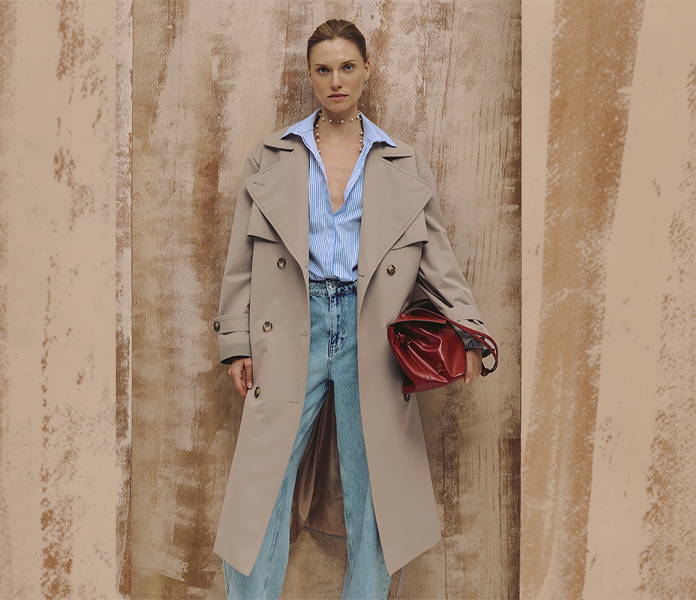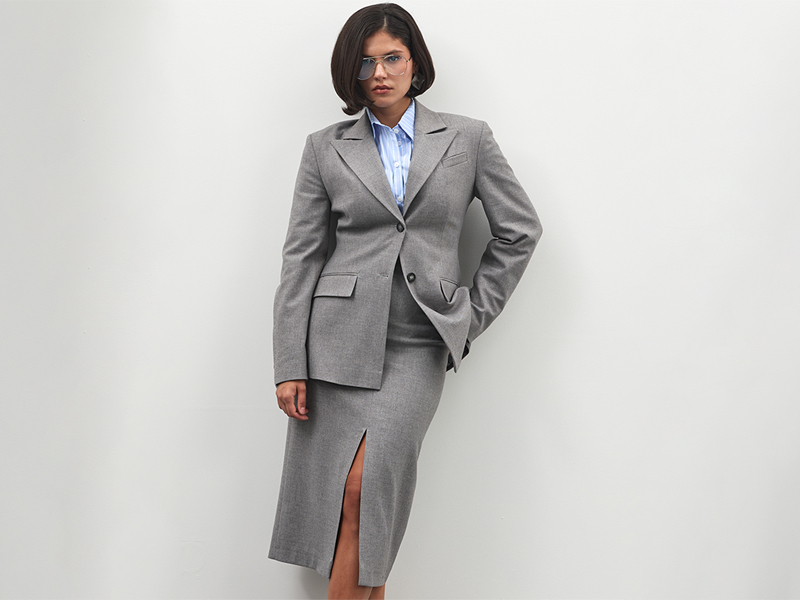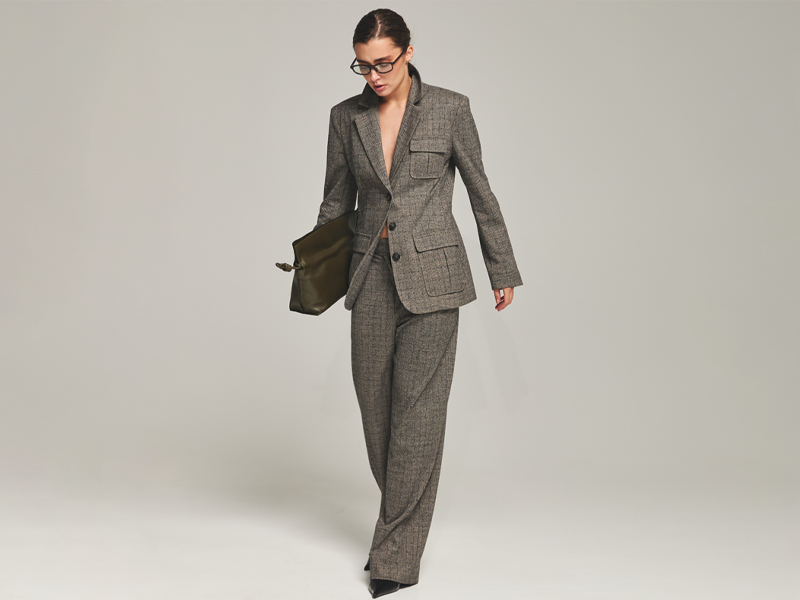

The fall–winter 2026/27 season is hard to reduce to a single silhouette, color, or mood. On the runways, fitted shapes meet wide shoulders, draping meets leather, restrained tailoring meets bold textures. Fashion seems to offer not a new look, but an entire coordinate system in which you can choose your own path.
At Chanel and Dior, feminine codes take on new plasticity. Saint Laurent works with a bold shoulder line and the power of a sharp silhouette. Prada and Loewe once again show how much depends on styling: a familiar piece transforms when placed in a different proportion or an unexpected combination. And in the aesthetics of Jil Sander, The Row, and other labels, materials, form, and precision of construction take on special importance.
What's interesting isn't only what's coming back into fashion, but how these trends interact with each other. Femininity becomes more expressive, tailoring moves beyond the office, textures gain independent significance, and layering turns into a way of working with proportions.
Together with Anastasia, stylist at Natali Bolgar, we break down the season's key trends—not as a list of obligatory purchases, but as a set of techniques you can adapt to your own wardrobe.


Femininity becomes more expressive
One of the season's notable lines is a return to a more defined feminine silhouette. An accentuated waist, fitted jackets, skirts, dresses, and draping change the plasticity of garments and bring attention back to form.
However, this isn't a literal recreation of the "lady" image from past decades.
"Femininity is interesting to explore not only through delicate forms. It can be just as compelling combined with masculine or rough elements. It's often on contrast that the most contemporary reading of a look emerges," Anastasia explains.
So this season's draping shouldn't be seen only as a decorative device. It can change the line of a dress, soften the construction of a jacket, or create movement where a silhouette feels too static.


Strong shoulders: shape as a statement
The 1980s silhouette is relevant again, but now it doesn't require a literal stylization of the era. Wide shoulders, structured jackets, and geometric lines help change the character of a piece and give a look a more defined construction.
On the runways, this device appears in different tones: from the almost dramatic force of Saint Laurent to more restrained versions, where a sharp form is balanced by calm fabrics and soft silhouettes.
"A bold shoulder line works well beyond just suits. It can be a way to adjust how an entire look is perceived: making it more put-together, adding confidence to posture, or balancing a soft bottom," Anastasia notes.


Leather and velvet: a season of textures
In the cold season, it's important not just to see clothing but to imagine it by touch. Leather, velvet, dense knits, velvety surfaces, and complex textures add depth even to a restrained color palette.
Leather is no longer limited to jackets: it appears in skirts, pants, dresses, and suits. Depending on the cut and styling, it can look strict, minimalist, relaxed, or almost evening-ready.
"Leather doesn't necessarily have to be the main statement of a look. It can be used as a way to add density and character to lighter or softer pieces. In such a combination, it works more subtly than in an all-leather look," Anastasia says.
Velvet works differently. It doesn't create a sharp contrast, but adds tactility, depth, and a certain retro intonation to a look. A velvet suit can be self-sufficient, so the rest of the pieces are better kept calmer: smooth knitwear, a simple shirt, or understated footwear.
This season, texture increasingly replaces elaborate decoration. Pieces don't need to be overloaded with details if they work in an interesting way with light, movement, and surface.


Tailoring moves beyond the office
Tailoring remains one of the foundations of the fall-winter wardrobe, but its tone is becoming more relaxed. Jackets, vests, and trousers are no longer obligated to exist only as parts of a single set.
On the runways, suit elements are increasingly losing their strict ties to business dress codes. At Chanel, Celine, Givenchy, and other fashion houses, tailoring appears less as a symbol of status and more as a tool for working with form.
"Today, a suit doesn't necessarily have to look like a finished, whole set. Its advantage lies precisely in the fact that individual pieces can be used in different styling scenarios," Anastasia comments.
This way, tailoring stops being clothing "for a specific occasion" and gets a much longer life in the wardrobe.


Deep colors: more than a seasonal palette
Burgundy and wine tones are drawing attention again, but the season's palette is much broader. Chocolate, dark green, deep blue, plum, and deep shades of red make it possible to work with color in a restrained yet expressive way.
Especially interesting are combinations where dark shades don't just replace black but enter into a dialogue with each other: chocolate with dark green, wine with graphite, deep blue with milky white.
Such combinations don't require a large number of details. Color alone creates the necessary tension—especially in suits, knitwear, and outerwear.
Sometimes refreshing a familiar look doesn't mean adding something new to it, but choosing a different shade.


Oversized knitwear: a focus on proportions
Oversized knitwear remains one of the main heroes of the cold season. Large sweaters, dense knits, and soft silhouettes are responsible for comfort, but at the same time require more careful work with proportions.
An oversized top can be paired with straight trousers, a midi skirt, or a more fitted bottom. However, the "big on top, narrow on bottom" rule isn't the only option. Two oversized elements can also work together if there's a balance of length, density, and form between them.
"With oversized knitwear, it's important to look not only at the size of the piece, but also at where exactly it creates volume. Sometimes it's enough to change the length or expose the wrist to make the silhouette lighter," Anastasia advises.
That's why even small details matter: sleeve length, shoulder line, the edge of a sweater peeking out from under the top layer. They help make the volume look intentional rather than accidental.


Layering as a way of working with proportions
Layering stopped being just a practical solution for cold weather a long time ago. This season, it becomes a way of working with length, texture, and volume.
At Prada and Loewe, styling plays no less a role than the pieces themselves: familiar wardrobe items are combined unexpectedly, change their purpose, or create new proportions.
A shirt under a sweater, a jacket over a knit dress, a t-shirt under a vest, or a belt over the top layer—these are techniques that help you see familiar pieces differently.
Layering doesn't work because there are many layers. It works when each one plays its own role: creating a new line, adding texture, or changing the ratio of volumes.


Statement accessories: a way to change the familiar
Seasonal trends aren't only found in clothing. Large bags, statement belts, chunky jewelry, striking footwear, and eyewear help refresh a familiar look without a complete wardrobe overhaul.
Materials and form play a special role: textured leather, embossing, deep color, or an unusual construction can make a simple outfit more complex without adding unnecessary decoration.
"Accessories let you quickly change the tone of a look. But it's important that the accent doesn't exist on its own: it has to support the form, color, or mood of the entire outfit," Anastasia explains.
One striking belt can change proportions, a large piece of jewelry can add character, and unusual footwear can affect how formal a look feels.


And what if none of the trends appeal to you?
Fashion doesn't assume that every trend has to make you want to try it on right away. What's more, a trend doesn't necessarily have to appeal to you literally in order to be useful.
You can think of it as research material: notice how a certain shape works, what a wide shoulder line does to a silhouette, how texture changes the perception of color, or why an ordinary jacket suddenly looks different in new proportions.
Sometimes it's enough to take not the piece itself, but just its principle. Don't wear wide shoulders—pay attention to the sharpness of the silhouette instead. Don't buy a leather suit—add one dense texture to soft knitwear. Don't repeat runway layering—combine what's already in your closet in a new way.
If you'd like to dig deeper into how to build your own style beyond seasonal dictates, we recommend reading the article "How to find your personal style if you don't like any trend."
After all, personal style doesn't begin with the ability to spot a trend in time, but with understanding exactly what you want to keep in your wardrobe—and why.


In closing
Fall–winter 2026/27 doesn't offer a single formula for the current look. Its main value isn't in the number of new trends, but in the chance to work with already familiar pieces in a new way: combining feminine with structured, soft with hard, familiar with unexpected.
This season's trends are more like tools than rules. You can use them fully, partially, or not at all.
Personal style begins where fashion stops being an instruction and becomes material for individual choice.