Ukrainian winters don't much like fixed rules. A hard frost can give way to a thaw, dry cold to a damp wind, and snow to rain within a few hours. Some mornings you really do need a warm puffer, and a few hours later, indoors, it's simply too hot.
That's why the question “what's better for winter—a coat or a puffer?” has no universal answer. All the more interesting that each of these pieces has its own history, its own character, and even its own idea of what a modern winter can be.


In brief
- The warmest piece isn't always the most useful. If most of your day is spent indoors or in a car, outerwear that is too warm can turn out to be less comfortable than a lighter option.
- Length changes what a piece does. A long puffer or coat protects more of the body, and in frost you feel it literally with every step.
A coat is not just an “autumn alternative” to a puffer. With the right construction, it can be full-fledged winter outerwear.
- A jacket is a category of its own. It works especially well when the weather and your wardrobe don't fit neatly into “autumn” or “winter.” The volume of a puffer has long since become a language of fashion. What was once a result of technology can now be the main element of a silhouette.
- Versatility has its limits. A piece that works equally well in frost, in rain, in a car, on a long walk, and with an evening dress will almost inevitably involve compromises.
- When choosing outerwear, think not only about how warm it is, but also about how exactly it will work throughout your day.


Winter is not a single temperature
When we choose outerwear, the easiest thing is to go by the number on the thermometer. But on its own, that number explains almost nothing.
The same frost feels different when you walk briskly through the city, stand at a bus stop, or step out of a warm car just to reach the door of a restaurant. Add wind, humidity, and the time you spend outside—and what seemed perfect in the morning is something you want to take off a few hours later.
That's why outerwear is worth judging by the conditions you'll wear it in, not simply by a “autumn” or “winter” label.
This is where it gets interesting: pieces that are formally seasonal can differ greatly in warmth, weight, length, and function.


The puffer: from gear to fashion silhouette
The puffer has an almost paradoxical history.
It was never created to have a beautiful silhouette. The original logic was purely utilitarian: to hold warmth where a person is exposed to extreme cold. Down insulation was used in clothing for mountaineers, polar explorers, skiers, and others who had no time for fashion experiments.
And then came what fashion does best: it saw beauty in function.
One of the most interesting moments in this shift came as early as 1937, when the American designer Charles James created an evening jacket from silk satin filled with down. In principle it resembled a quilted blanket, but it was designed as a complex, sculptural piece of haute couture. In effect, down insulation was given a completely different role for the first time: it was no longer there only to keep you warm, but became part of the form.
A few decades later, Norma Kamali took the next step. In 1973 she turned her own sleeping bag into a long coat—and the Sleeping Bag Coat was born, later becoming one of the best-known examples of outdoor logic moving into fashion.
So the puffer gradually stopped being clothing that simply retains heat and became clothing that shapes an outfit.
Volume, the sheen of the fabric, length, the shape of the collar—what began as a consequence of technology has turned into a full design language.


The coat: why this construction outlasts trends
A coat has something a puffer finds harder to achieve: it creates an outfit before you even start styling it.
This is the result of the construction itself. The line of the shoulders, the collar, the lapels, the length, the vertical of the closure—everything works for the silhouette. That's why a coat can make even the simplest combination of a sweater, jeans, and boots look put together.
But its staying power in fashion isn't explained by aesthetics alone.
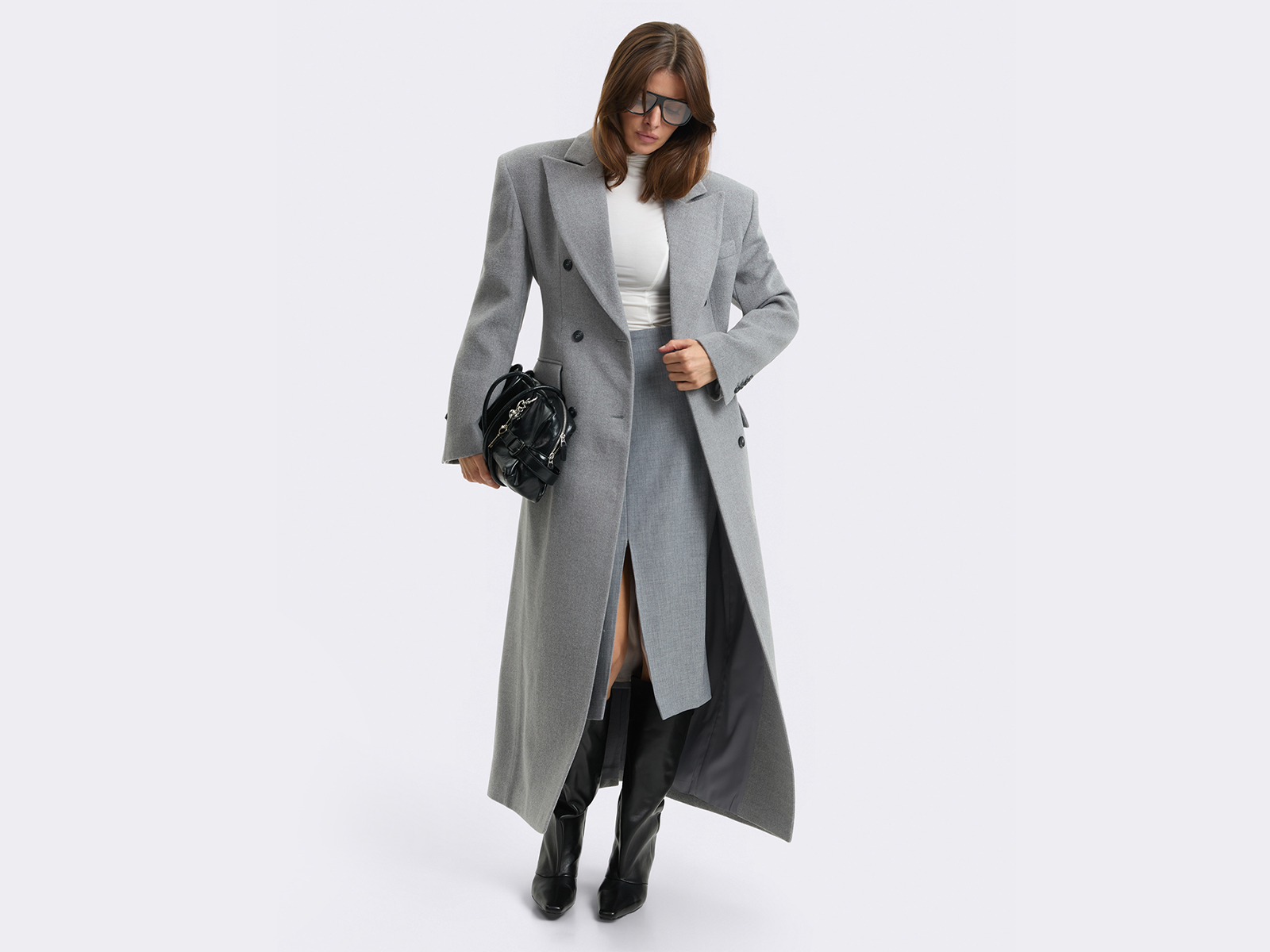
A coat is one of those pieces that adapt easily to change. The width of the shoulders, the length, the shape of the collar, the fit, the way it's worn all shift—while the construction itself remains recognizable. Today a coat can be straight and almost austere, tomorrow extremely voluminous, with strong shoulders or an exaggerated collar.
In other words, its strength lies not in a particular cut but in its ability to change without losing its own language.
And that's why a good coat doesn't have to look “fashionable” in the literal sense. It can be very current thanks to its proportions, fabric, and fit, yet not depend on a single trend.
For winter, it also matters that a coat can be truly warm. Dense wool fabric, sufficient length, well-thought-out tailoring, a lining, and room to comfortably wear a sweater or jacket underneath make it a full-fledged winter option.


The jacket that doesn't ask you to pick a season
What makes a jacket interesting is that it hardly respects the calendar at all.
It can be light—for a cool autumn. Insulated—for a cold one. Quilted—for the first frosts. Leather or suede—when you want outerwear to be the main accent of an outfit.
That's exactly why the jacket is having another moment of popularity.
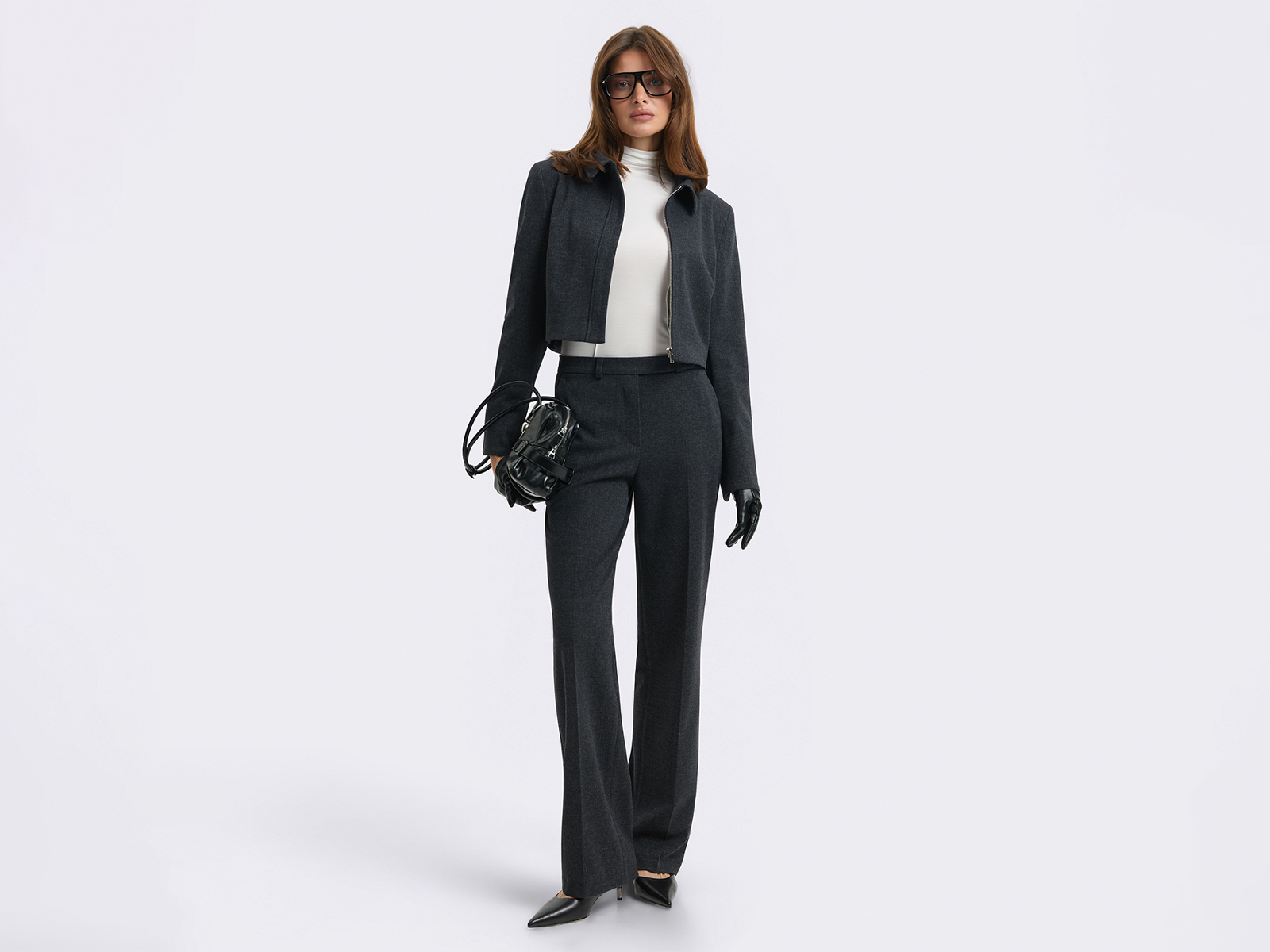
In the autumn-winter 2026/27 season, fashion is playing actively with functional codes: military details, workwear silhouettes, high collars, utility pockets, short and voluminous shapes. Practical clothing no longer tries to look “merely practical”—it becomes a full part of styling.
So a good jacket is not a fallback for days when it's “not yet cold enough for a puffer.”
It can completely change the character of an outfit: a laconic coat will make it more restrained, a voluminous puffer more relaxed, and a structured short jacket will add graphic edge even to the simplest combination of denim and knitwear.


What really determines warmth
Here it's important to move away from the simple logic of “thicker means warmer.”
Warmth comes not from a single characteristic but from the whole construction of a piece. For insulated clothing, what matters is how well the material traps air, how the insulation is distributed, whether “cold zones” appear, how snugly the piece closes, and how it protects against wind.
That's why so much attention is paid to quilting in clothing for the cold. It doesn't only create a decorative pattern: its job is to hold the insulation in place and help distribute warmth evenly. But quilting that is too fine or poorly designed can also affect how a piece performs, so the construction has to work together with the material.
A coat follows a different logic: the density of the fabric, its composition, thickness, length, and tailoring determine how well it holds heat. Room inside matters too: clothing shouldn't compress the warm layer beneath it, but excess volume doesn't always add comfort.
That's why professionally constructed outerwear is always a balance of material, construction, fit, and movement.
And this is where it becomes clear why two pieces that look alike can behave in the cold in completely different ways.


Length, volume, and fit: when fashion works for practicality
With outerwear, proportions work in especially interesting ways.
A short jacket leaves more of the legs exposed, but gives more freedom of movement and a completely different silhouette. A long puffer protects more of the body. A knee-length, midi, or maxi coat changes the proportions of an outfit differently each time.
So length is worth choosing not only by the principle of “I like it—I don't.”
If you walk a lot in winter, a length below the hips can make perfectly practical sense. If you often get behind the wheel, a model that's too long may be inconvenient. If there is always a bulky sweater or jacket under your outerwear, the fit should allow for it.
But this is exactly where function meets fashion—and it isn't necessarily a compromise.
In the 2026/27 season, long coats, strong shoulders, short jackets, voluminous puffers, military-inspired pieces, and restrained minimalism all coexist. In other words, how current a piece feels is determined less and less by one particular cut.
What matters far more is how the piece is built and what place it takes in an outfit.


When the warmest doesn't mean the best
It's tempting to think that the best winter outerwear is the one that provides maximum warmth.
But picture an ordinary winter day: a few minutes outside, a car or the metro, the office, a shop, a café, transport again. In that scenario, an extremely warm long puffer can be far less comfortable than a coat or a lighter jacket.
And the reverse: if a long walk is ahead, waiting for transport, or several hours outdoors, the advantage goes to the piece that holds heat better and protects from the wind.
So the question isn't how warm outerwear can be.
The question is how much warmth you really need and how long you'll be in those conditions.


How to tell a piece will stay in your wardrobe for a long time
Before buying, it's worth picturing not one beautiful outfit but several ordinary days.
Will the sweater you love fit under this piece? Will it be comfortable to sit in a car? Will the sleeves get in the way under a jacket? Can you fasten it without losing the silhouette? Does it protect your neck? Won't it feel too heavy after a few hours of wear? This is less romantic than falling for a coat at first sight.
But it's exactly these details that decide whether a piece becomes part of your wardrobe or just a beautiful purchase.
And only after that can you look at color, texture, how current the silhouette is, and the styling possibilities.


FAQ
Can a coat be full-fledged winter outerwear?
Yes. What makes a winter coat isn't the name but the construction: the density and composition of the fabric, the length, the tailoring, the lining, the wind protection, and the room to comfortably wear a warm layer underneath.
Why does the length of outerwear matter so much?
Because it directly affects which part of the body the piece protects. But it's also a question of lifestyle: a long style is better for spending a long time outdoors, while a short one is often more convenient behind the wheel or when you're on the move.
Does winter clothing have to be voluminous?
No. Volume is only one way to create the insulation you need. At the same time, in modern fashion it can be a deliberate element of the silhouette, not simply a result of insulation.
Do you need a coat, a puffer, and a jacket?
Not necessarily. But if each piece has a different job, they don't duplicate one another—they expand what your wardrobe can do. A jacket can suit changeable weather, a coat city outfits, a puffer prolonged cold. In that case, three pieces can work more effectively than several similar ones.


Not one perfect piece, but the right choice for a specific day
Perhaps the best winter outerwear is not the one that tries to be everything at once.
A coat can remain a coat—with its own silhouette and a particular sense of a put-together city outfit. A puffer can honestly be a puffer—warm, voluminous, functional, and fashionable at the same time. A jacket doesn't have to pretend to be either one, and can simply work where it's needed.
Because a good winter wardrobe is not a collection of pieces “just in case.”
It's when you look out the window, know your plans for the day, and understand which piece will be not just beautiful today, but right.