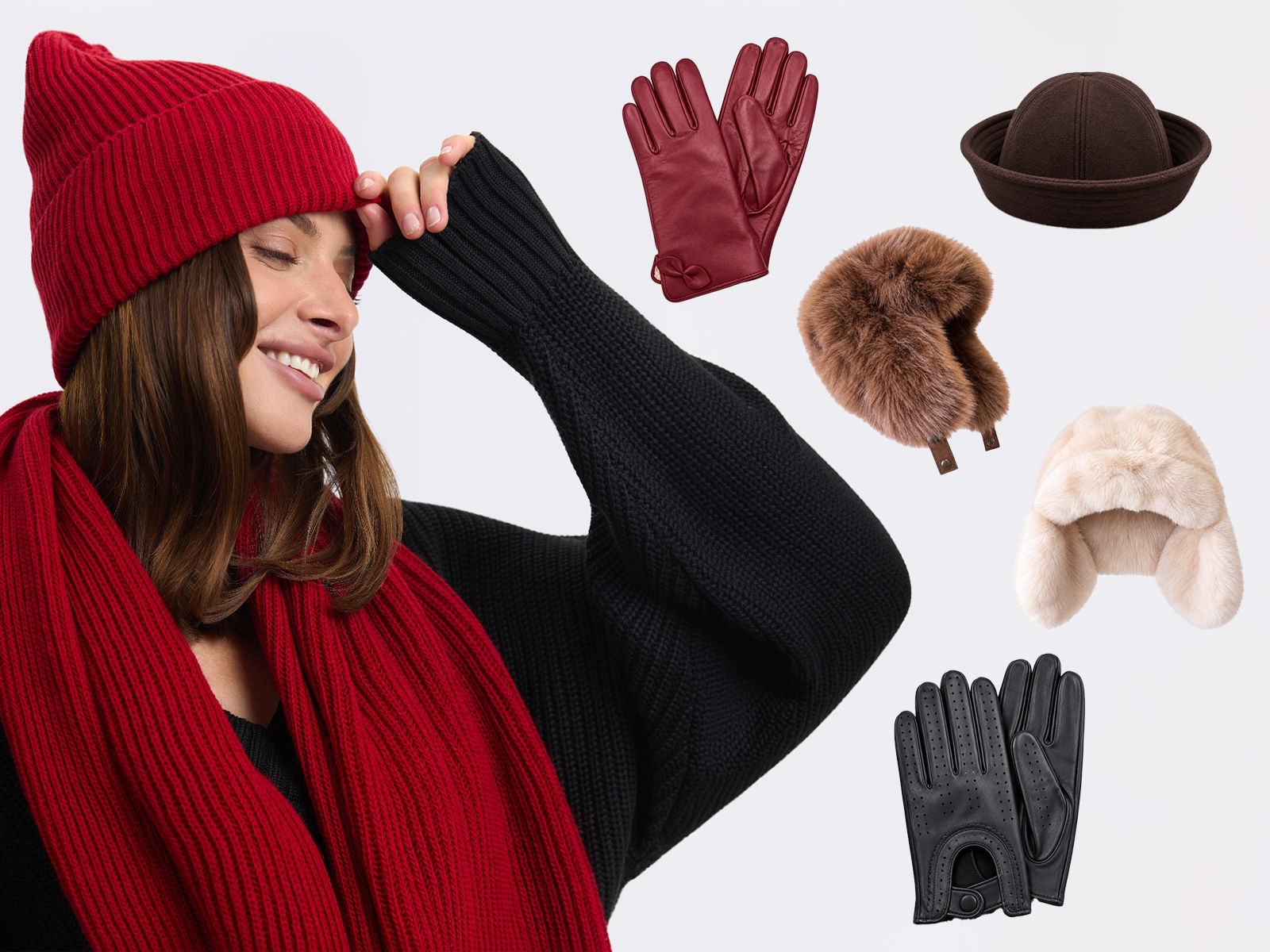
Some accessories simply complete a look, and some suddenly change its mood entirely. That is exactly how a scarf works.
It's a remarkable thing when you think about it: it weighs almost nothing, takes up barely any space, doesn't ask for much of a budget — and yet it can literally "pull together" even the simplest basics: a shirt with jeans, a linen suit, or the black dress you'd started calling, a little wearily, "nothing special."
Ironically, for years the scarf carried a reputation as an accessory "not for everyone": too classic, too grown-up, sometimes even "grandmotherly." It seems the time has come to give it its due.


From Grace Kelly to Hailey Bieber: why the scarf keeps coming back into fashion
To be honest, the scarf never really left — it just kept changing roles.
Once it was purely practical: protecting hair from wind, sun, and dust. Then it became a symbol of elegance. In the 1950s–60s it was worn by Grace Kelly, Audrey Hepburn, Brigitte Bardot. Tied over the head in a convertible, casually draped over the shoulders, over a coat or a shirt — it became part of that effortless elegance everyone loves to reminisce about, though few can actually pull it off.
Later came the legendary Hermès carrés — square silk scarves that essentially turned the accessory into a cultural code. Not just an item, but a gesture of style.
Then there was a stretch when the scarf unfairly became something "too classic." Now it's back — this time as a styling tool.
Just look at Hailey Bieber, Sofia Richie Grainge, Elsa Hosk, or Rosie Huntington-Whiteley. On them, the scarf almost never reads as "retro" — it works as the detail that gives a look its finish: a touch of Riviera, a touch of old money, a touch of effortless summer.


The most common mistake: assuming a scarf "isn't for you"
In reality, the problem is almost never the scarf itself, but the approach to styling it. A scarf tied "the old way" and a scarf styled in a modern way are two entirely different stories.
That's exactly why one look reads as a retro costume and the other as a genuinely thoughtful, stylish outfit. A simple formula is at work here: the plainer the clothing, the more current and relevant the scarf looks.


Around the neck — but not "the classic way"
Yes, this is the most obvious way to wear it, but here it's all about how exactly.
These days, soft, slightly loose knots look best: a narrow-folded scarf over a shirt, tucked under a jacket collar, or simply a light knot at the bare neck. Less "flight attendant," more effortless mood.
It looks especially beautiful with structured jackets, men's-style shirts, or simple knitwear.


In the hair — without the retro costume feel
This was once how 1940s Hollywood stars wore it.
Today it's more about lightness.
A low ponytail with a scarf woven in, a loose bun, a scarf worn as a headband instead of an actual hairband. Or a scarf tied bandana-style — but styled not with a retro dress, rather with a linen shirt, oversized sunglasses, and simple jewelry.
Balance is what matters here: the simpler the look, the more modern the scarf reads.

On the bag — the simplest way to pull a look together
This is perhaps one of the most underrated tricks, especially if you love a basic wardrobe.
Even a plain leather bag suddenly looks more interesting once a scarf appears on the handle. Not perfectly symmetrical, not too carefully arranged — a little looseness only helps here.
It's especially beautiful when the scarf's color happens to pick up the tone of a shirt, shoes, or even lipstick.


The kerchief: a modern take
There's another version that has made a striking comeback in recent seasons — textured, woven, or lightweight summer kerchiefs.
The kind you want to wear with linen sets, a straw bag, an oversized shirt, or simply a white tank top. Not a "countryside" vibe — more of a Riviera aesthetic.
These scarves are ideal as a headscarf or as a soft belt over a dress or wide trousers.
And the main rule here is extremely simple: don't overcomplicate it.


At the waist — instead of a belt
One of the most beautiful summer tricks. Especially for linen, denim, or simply cut dresses.
A scarf worn as a belt adds movement and a touch of that Italian ease that's hard to explain but easy to recognize.
Soft, slightly imperfect knots work best — as if you hadn't tried too hard. Though, of course, you did try, just a little.

On the wrist — a small stylistic gesture
Sometimes a look doesn't need one more piece of jewelry, but something a little less obvious. A scarf casually tied around the wrist instead of a bracelet is exactly that kind of move.
It works especially beautifully in monochrome looks, where you want to add a bit of color or texture.


As a top? Yes. But there's a nuance
Fashion loves the idea of a scarf-as-top. In summer this can genuinely look stunning, but appropriateness plays the key role here.
This styling works best not in the TikTok version of a "beach look," but paired with wide trousers, a men's shirt worn untucked, or a jacket thrown over the shoulders — fewer trends, more of a sense of style.
At Natali Bolgar, the scarf reveals itself especially well in a basic wardrobe — where a single detail can transform familiar pieces. A linen set, a white shirt, a structured jacket, or a simple dress suddenly takes on new life once the perfect accent appears — understated, yet remarkably precise.
Perhaps this is the scarf's main secret. It rarely becomes the central element of a look, but somehow, almost every time, it makes that look one of a kind. Because sometimes style really does start with one small detail.