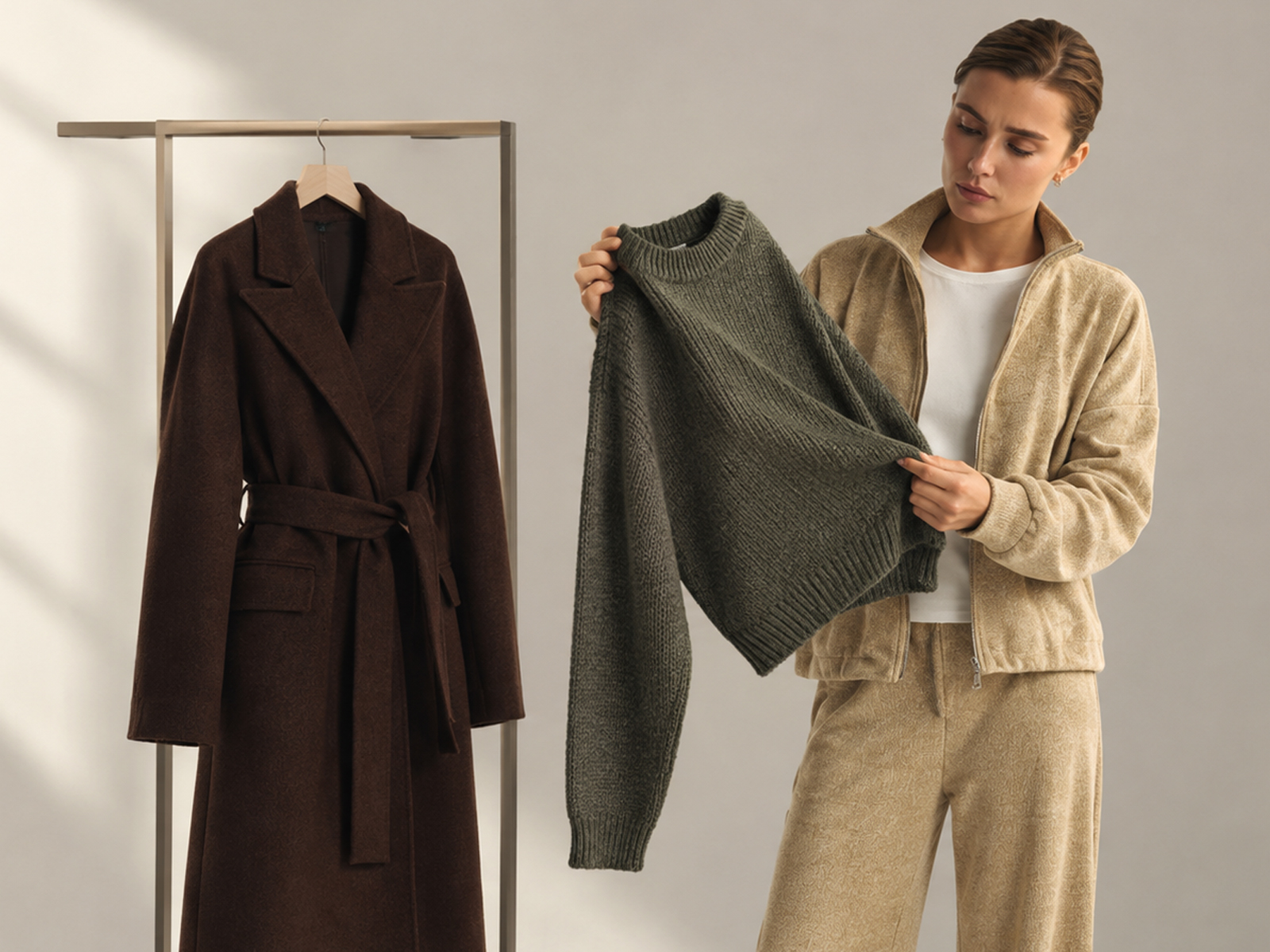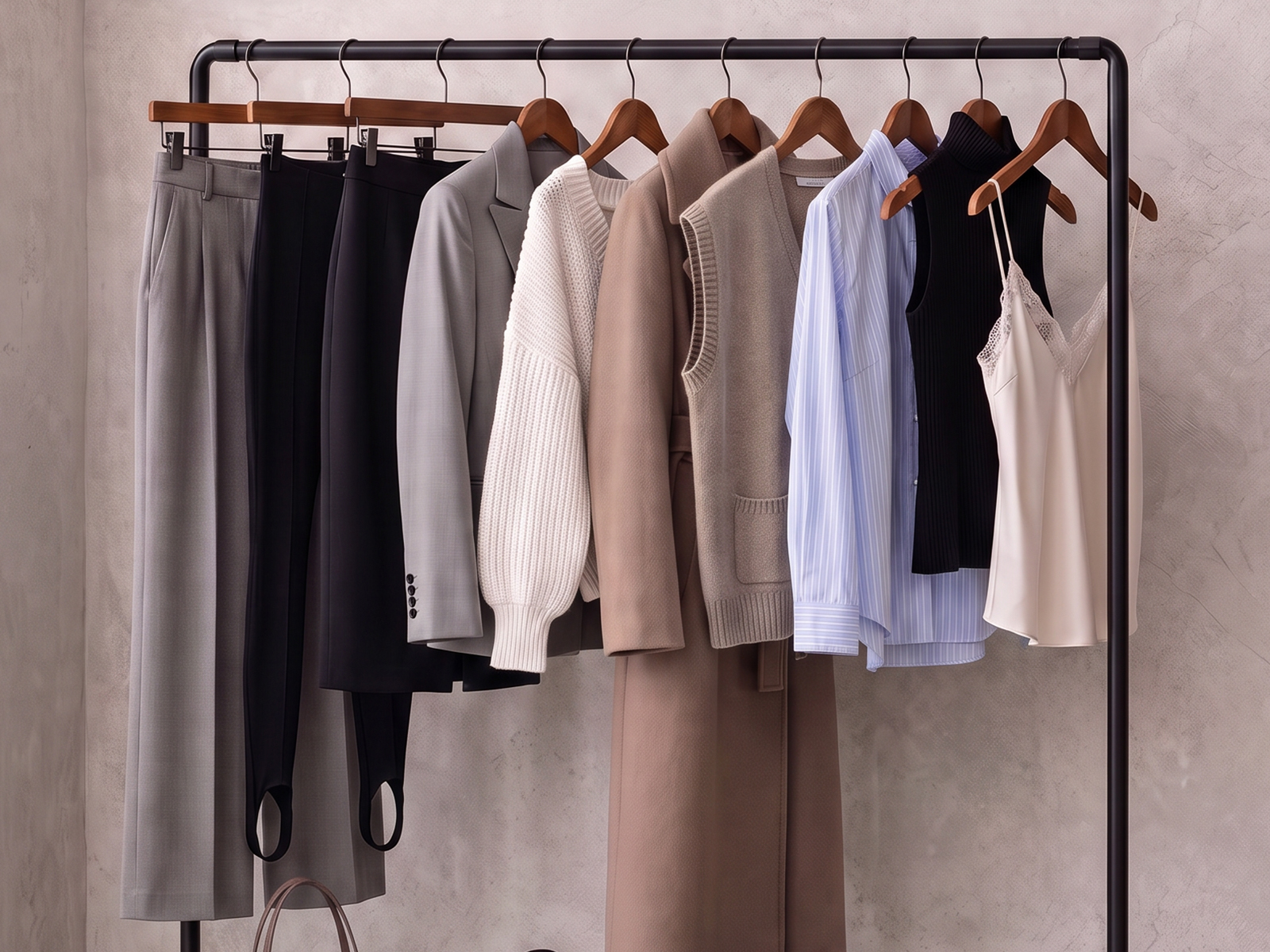
"I already know every tailor shop nearby. Because almost every piece needs altering."
Sound familiar?
The trousers are too long. The jacket doesn't sit right. The dress looks nothing like it did on the model. And at some point you start thinking the problem is your height.
When really, it's about how the clothes interact with your figure.
That's exactly what we set out to test with Natali Bolgar stylist Anastasia. And this time, not in theory. I became the model for this experiment, to see how perception shifts when the approach does.
Where the real difficulty lies
"A petite frame doesn't need correcting. It needs precision," says Anastasia.
Lines that run too long. Random proportions. Sharp contrasts. And the clothes start pulling focus onto themselves, instead of framing you.
Fashion already went through this in the '90s. Minimalism stripped away the excess back then, leaving only what mattered: shape and proportion. They're still what determines how we come across.
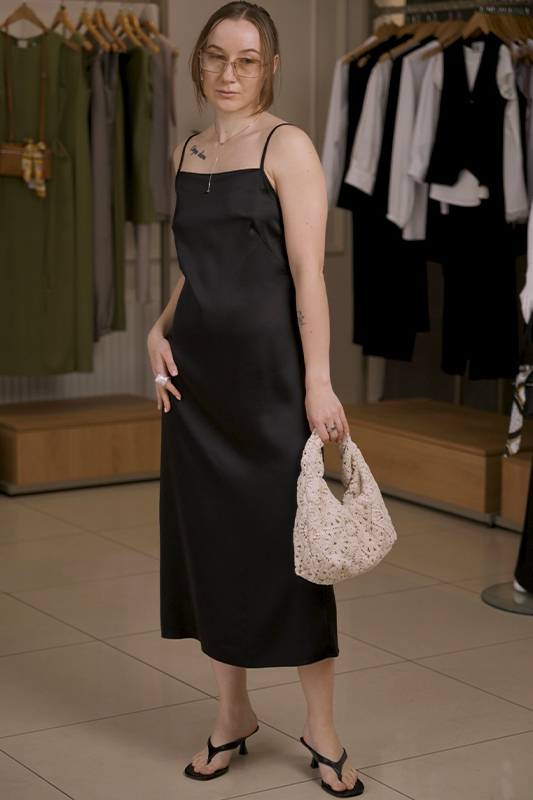
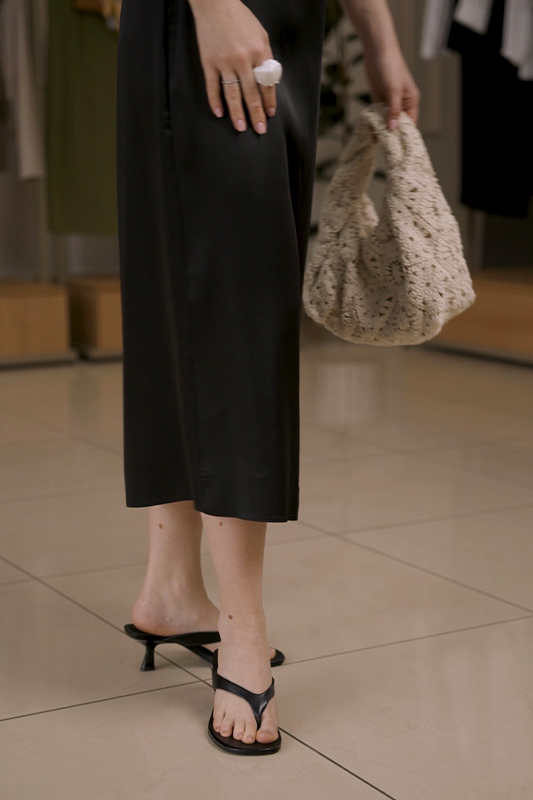
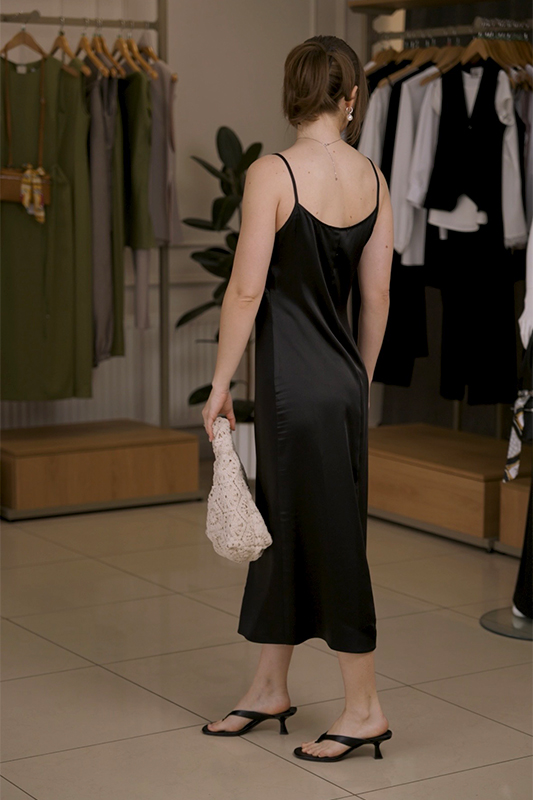
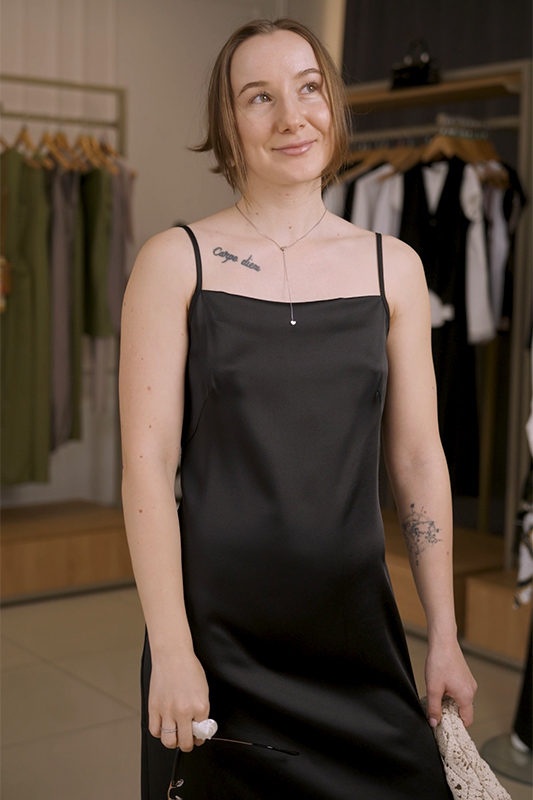
Look 1. When nothing interrupts the silhouette
We started with the simplest option: a black midi-length dress in faux silk. No complicated construction, no layering, no extra accents.
"When a silhouette isn't broken up, it automatically reads as longer," Anastasia points out.
The lightweight fabric moves with the body and doesn't add bulk. Bare ankles add a sense of lightness. And even a modest heel works very subtly, without the sense that you're deliberately trying to look taller.
This is a case where simplicity does the job more precisely than a complicated solution ever could.
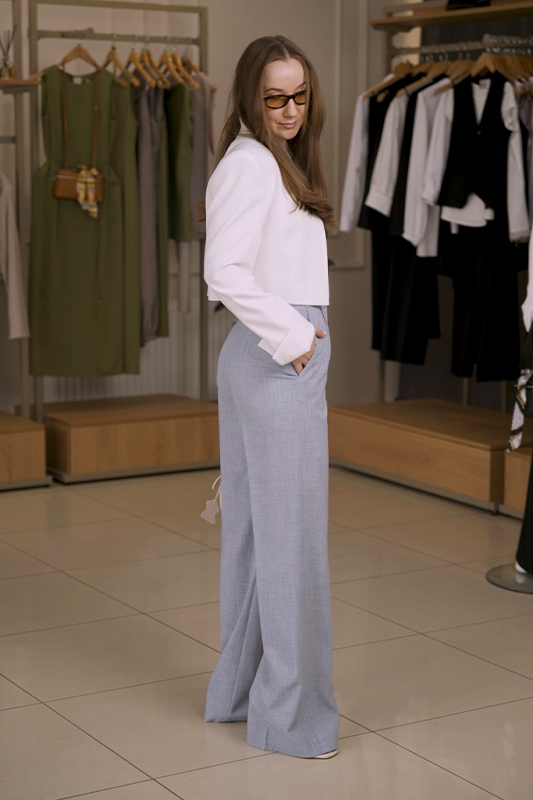
Look 2. The one detail that changes everything
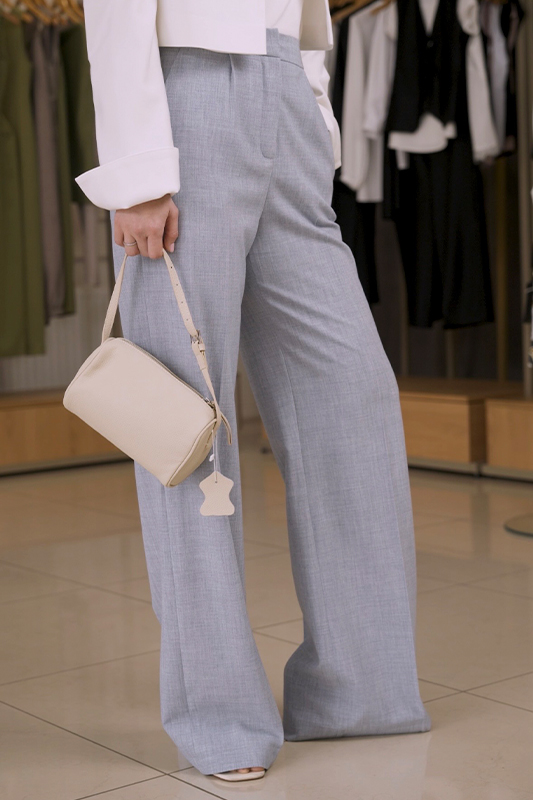
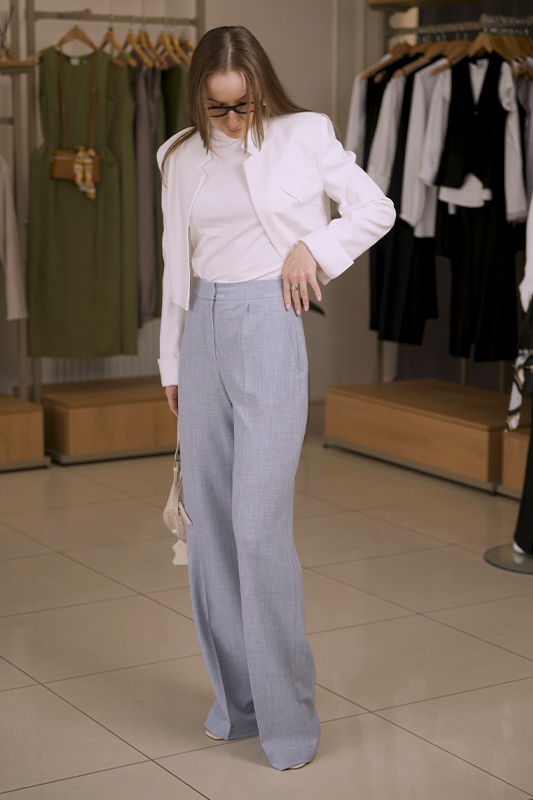
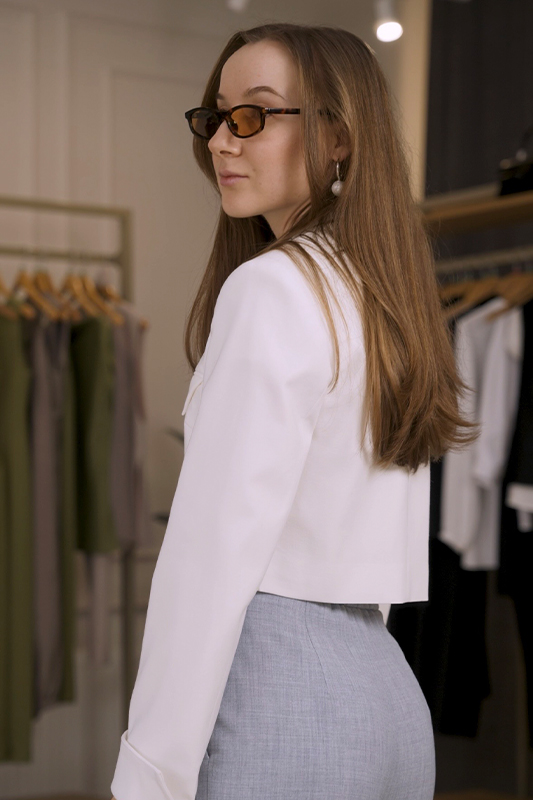
Everything in this look rests on proportion: a cropped jacket line, a clean vertical in the trousers, and a calm base that doesn't compete for attention.
Here, as the stylist explains, the key is waist placement. When it sits higher, the silhouette instantly reads as more proportionate. The legs appear longer, even though the cut itself stays restrained.
Pressed creases add verticality. The light palette avoids any harsh transitions. And the whole look reads as easy, put-together, and very natural.
Look 3. When color works for you
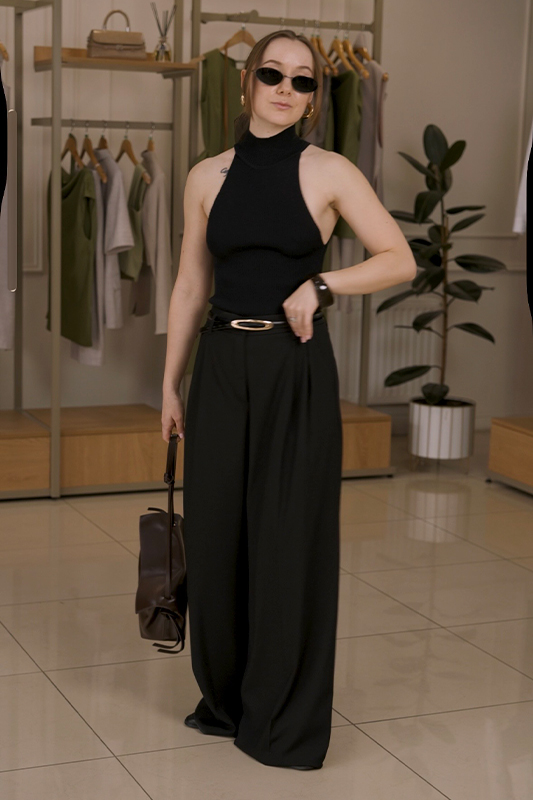
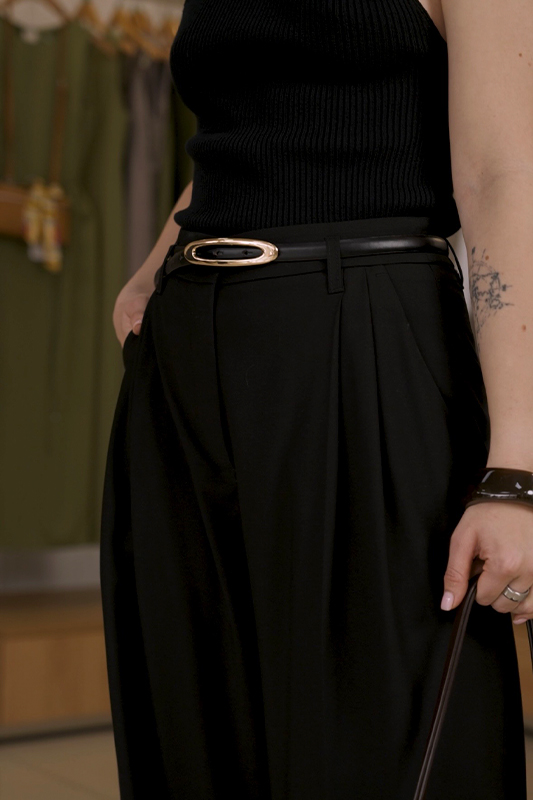
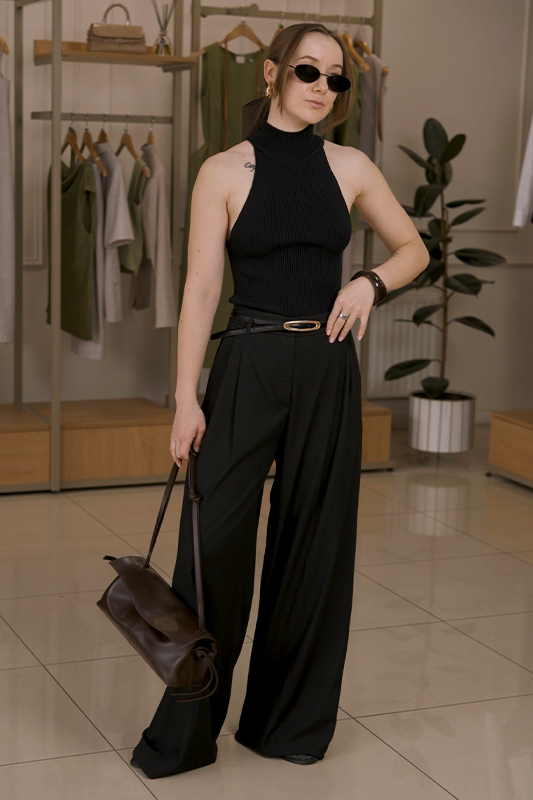
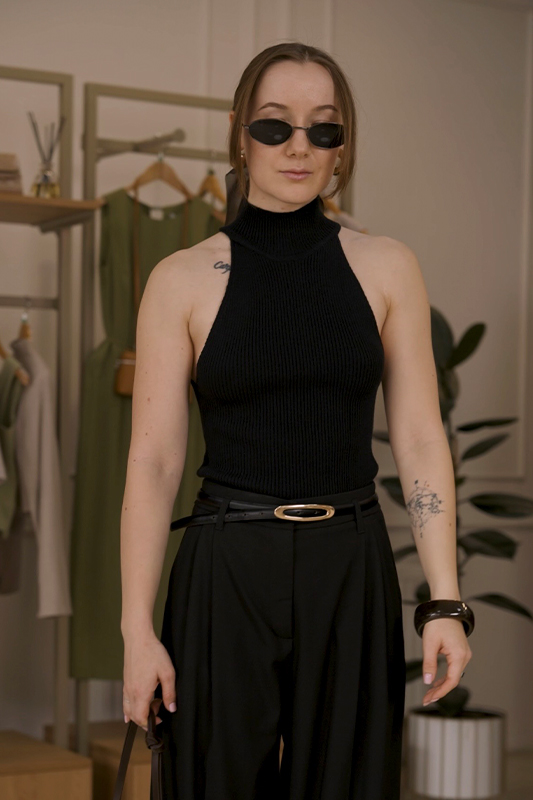
Here we put together a total black look: black palazzo trousers and a black ribbed knit top. And it's exactly in a look like this that you can really see how monochrome works.
As Anastasia explains, when a look is held in a single color, the silhouette reads as one whole, with no visual pauses or unnecessary divisions.
That's precisely why even the palazzo trousers don't feel heavy. The vertical texture of the top reinforces the effect, and bare arms add lightness so the look doesn't feel overloaded. It's one of the simplest tricks there is, and it delivers a very fast, very visible result.
Look 4. Precision in the details
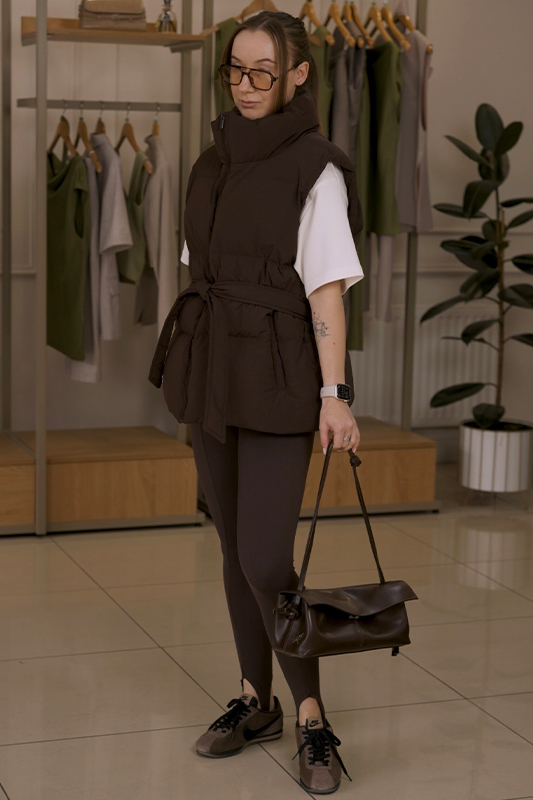
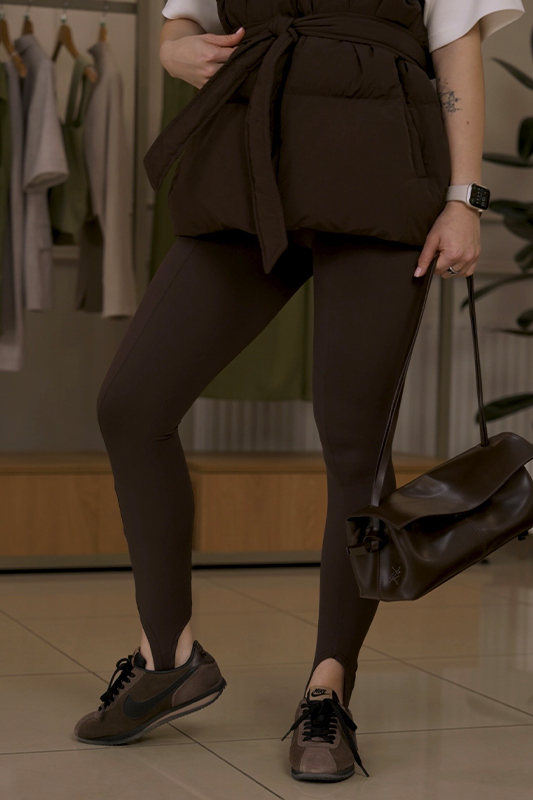
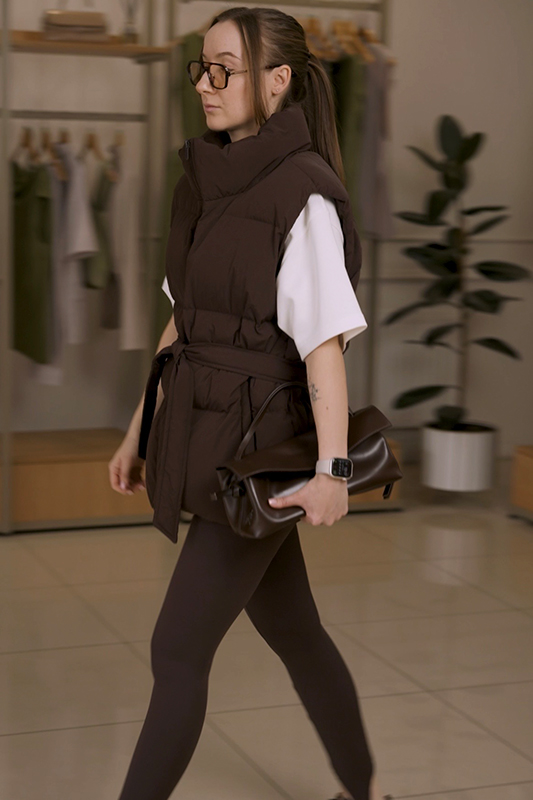
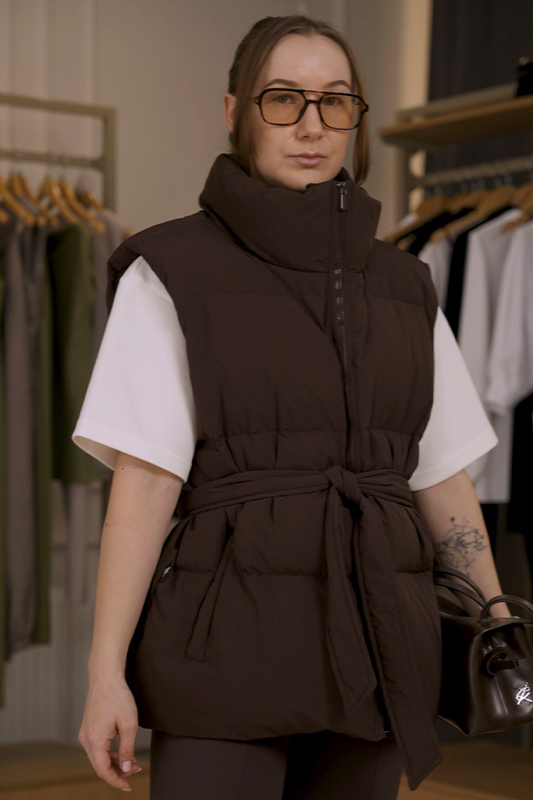
An everyday look that's easy to underestimate: stirrup leggings, a vest, and a light-colored top.
"What matters here is that nothing 'cuts' the leg," Anastasia notes.
The leggings create an unbroken line. The stirrups are an almost invisible detail that visually extends that line downward. The vest adds structure without creating contrast. And the light-colored top balances the volume without overloading the look.
The result feels very natural, and that's exactly why it's convincing.
What actually works
After this experiment, the answer turned out to be very concrete.
There's no such thing as "the right clothes" for a given height. There are solutions that work:
— an unbroken silhouette without a sharp divide
— a considered length
— attention to where the waistline sits
— verticals in the cut and texture
— soft color transitions
These aren't limitations. They're tools.
The result
None of these looks made me taller. But each one made the silhouette more precise.
The feeling that a piece needs to be "rescued" through styling disappeared. What replaced it was something else: a quiet certainty that it already fits and works exactly as it should.
You can see more of how our experiment unfolded in the video:
Height is just one characteristic. And style begins the moment you understand how to work with it.