How to Dress If You're a Rectangle?🤔
The key features of this body type:
-proportional upper and lower body
-no defined waistline
-slim legs and arms
The most common request from "rectangles" is to visually create a waist and highlight the strengths of the figure. Swipe through and save these tips from our stylist 👇
#natalibolgar
How to Know If This Is Your Type
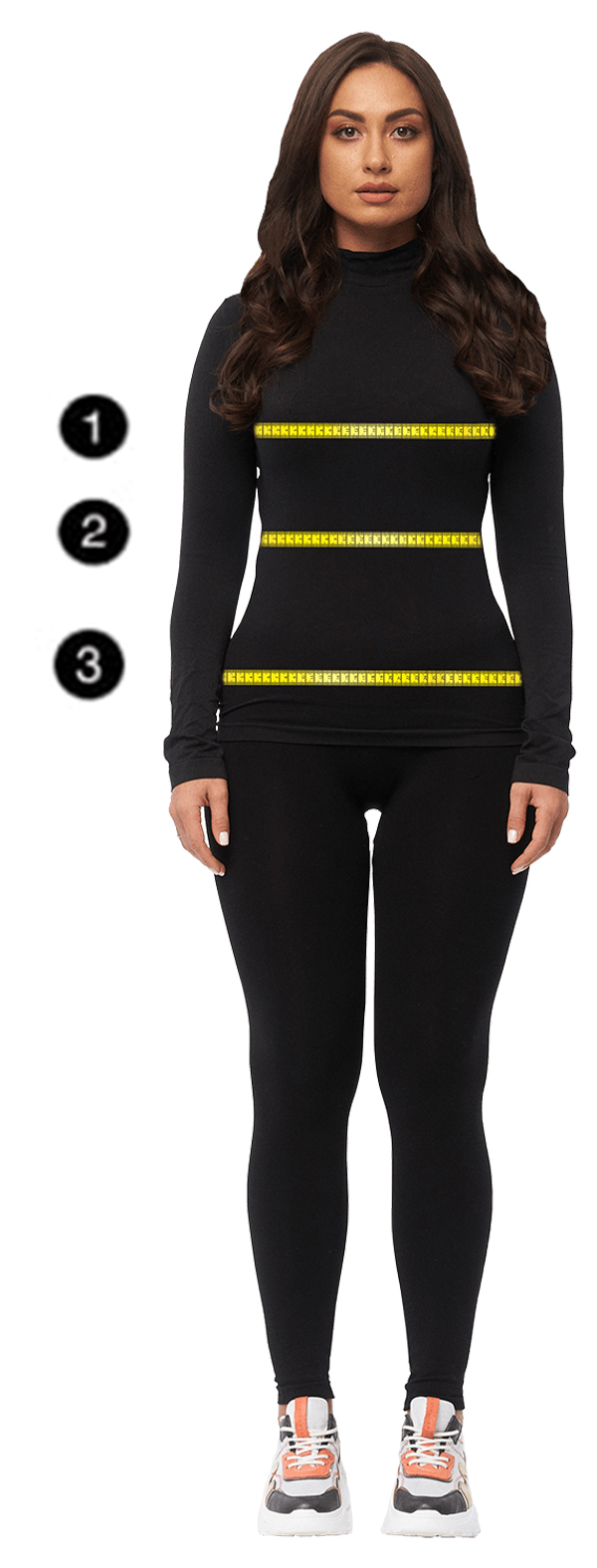
Rectangle is when the shoulders, waist, and hips are close in measurement: the difference between waist and hips is less than 20 cm, and the shoulders and hips are nearly level.
This isn't an "absence" of a waist, but an undefined waistline. It doesn't need to be created from scratch — it just needs to be marked out with the cut.
Fit
It's best to avoid mid-rise and low-rise fits. The most flattering fit for a "rectangle" is a high waistline. This applies to bottoms as well as dresses.
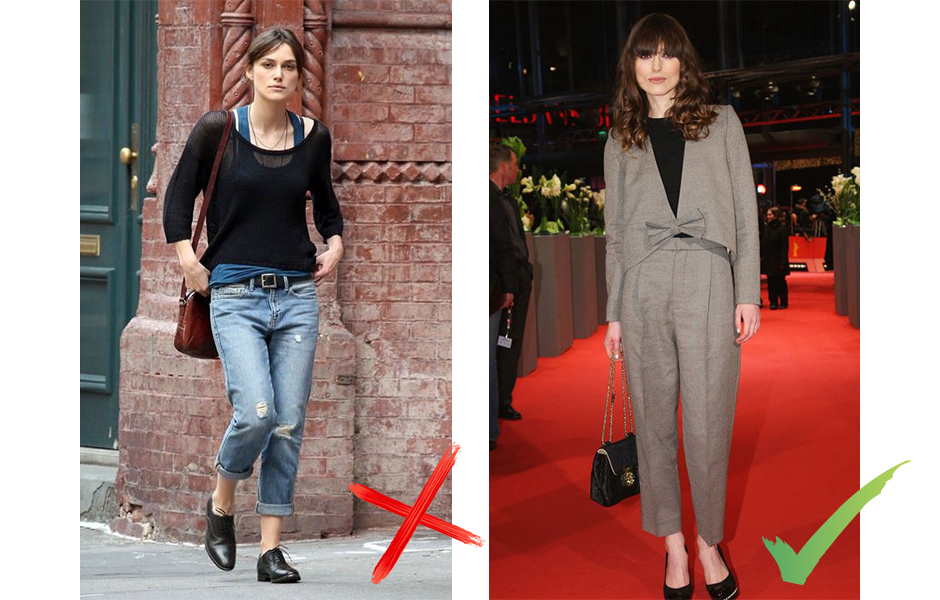
A high waistline divides the silhouette in proportions closer to natural: a shorter top, a longer bottom. Visually, this reads as a waist.
Silhouettes
It's best to avoid fitted silhouettes and lean toward semi-fitted ones, so there's some "air" between the body and the fabric. Adding a slim belt can also help define the waist.
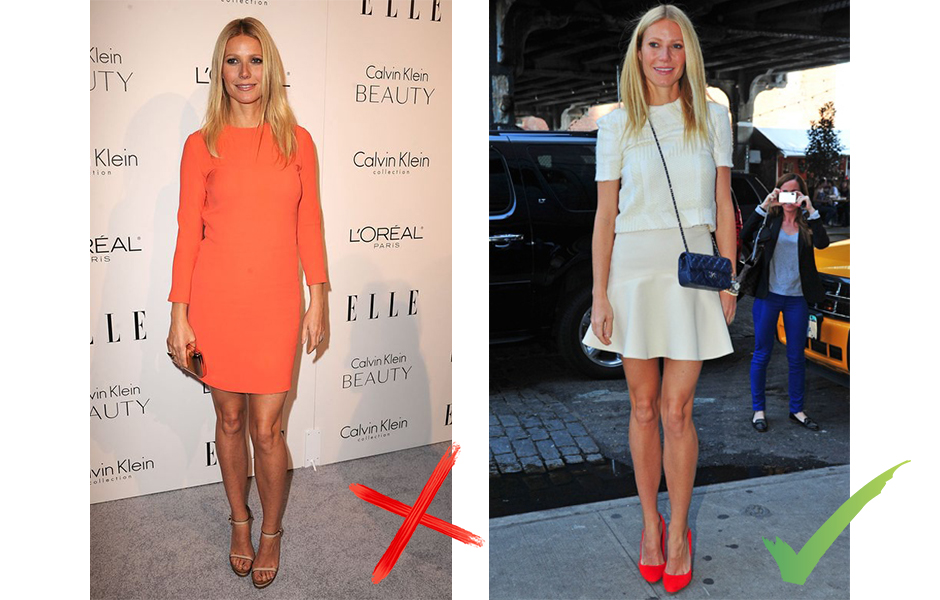
Semi-fitted means the piece follows the line of the body without hugging it. The easiest way to check: a palm should fit between the fabric and your waist.
Bottoms
To visually narrow the waist, create volume around the hip area. Use voluminous bottoms for this: flared skirts, palazzo pants, banana-fit trousers, culottes, styles with patch pockets, and the like.
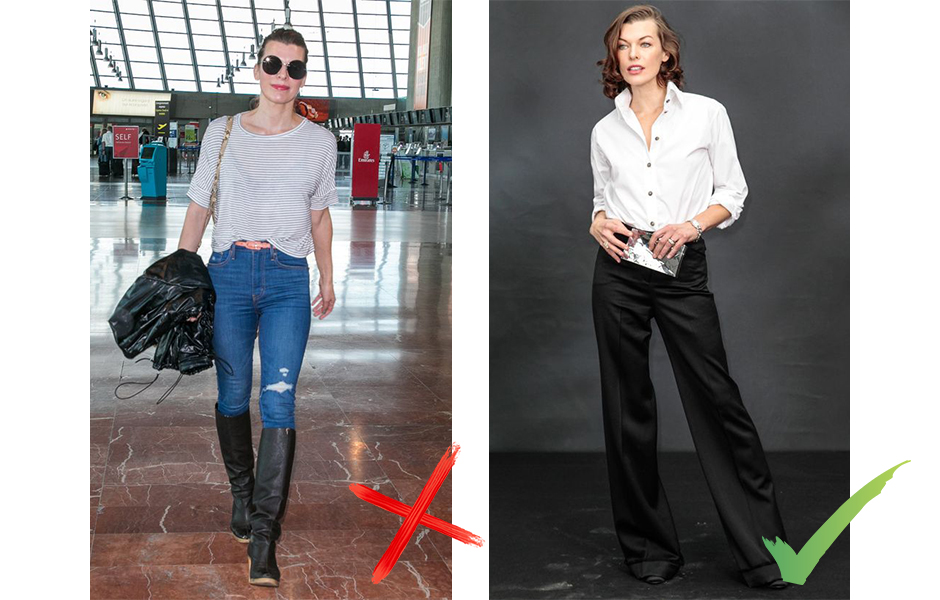
Specifically: a circle skirt, pleated-front trousers, culottes, banana-fit jeans, a wrap skirt. Volume placed right at the hips creates the contrast your waist is missing.
Dresses
- Shirt dress (especially with a belt)
- Wrap-style dresses with a peplum
- A-line
- Pleated
- Off-the-shoulder
- Mini
It's best to avoid fitted and straight-cut dresses.
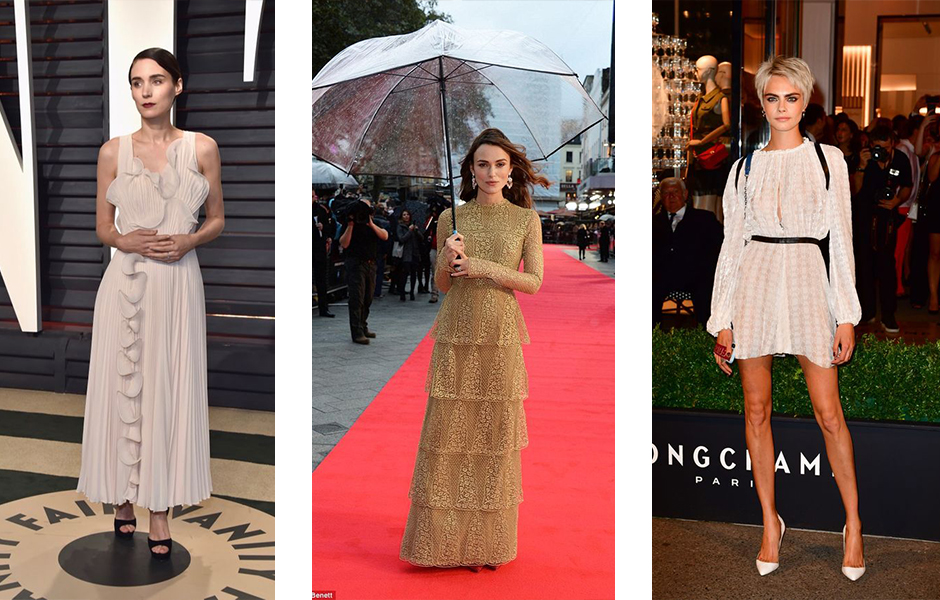
A peplum dress and a dress with a cut waistline work most reliably — they draw the line that isn't there. A straight cut without a belt, on the other hand, emphasizes the silhouette's uniformity.
Accents
"Rectangles" most often have long, slim legs, so don't hesitate to wear minis. Ideally paired with volume on the upper body: ruffles, frills, balloon sleeves, fringe.
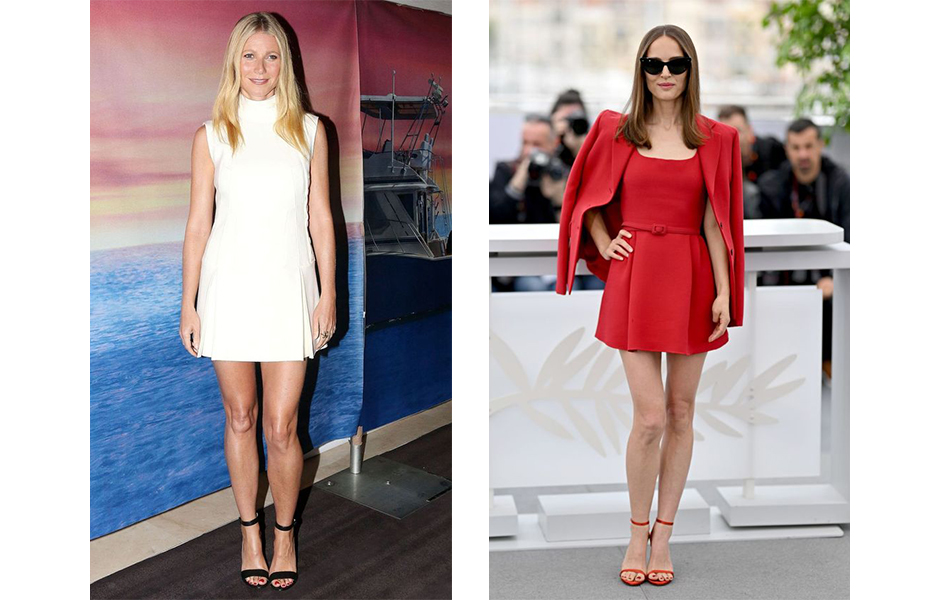
Volume on top and bottom at once, with a narrow belt in between — a classic formula for this type: ruffles at the shoulders, a circle skirt, a 2-3 cm belt.
Necklines
Deep U- and V-necklines will elongate the neck and open up the décolletage. This draws attention away from an undefined waist and makes the silhouette appear more delicate. Trousers, skirts, and dresses with high slits are also a perfect fit.
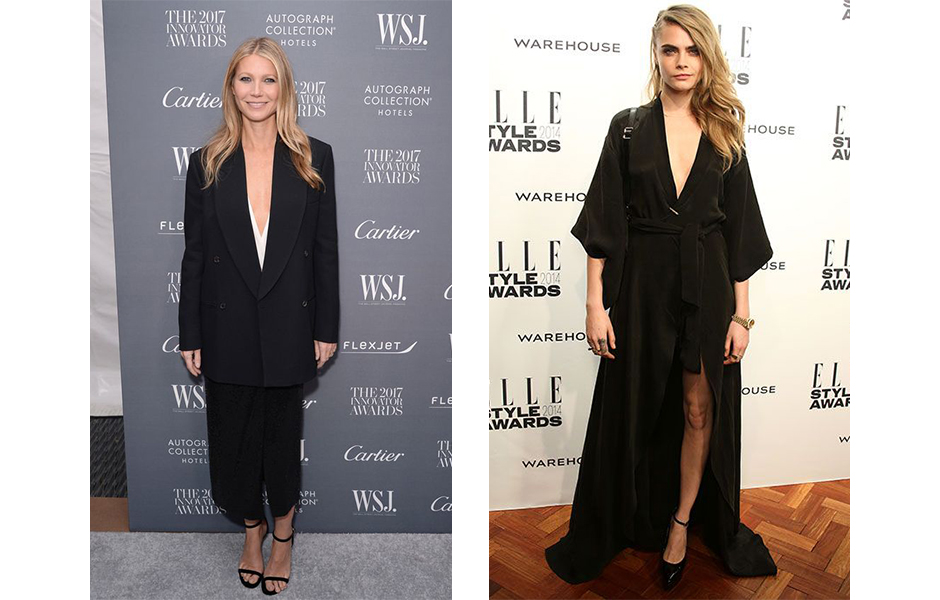
V and U necklines elongate the neck, and combined with a high-waisted bottom, they create the vertical line that makes the silhouette read as slimmer.
Textures and Prints
Experiment with texture and prints to add "interest" to your look. For instance, a top in a printed or textured fabric can draw attention to the upper body and create certain curves, balancing the silhouette.
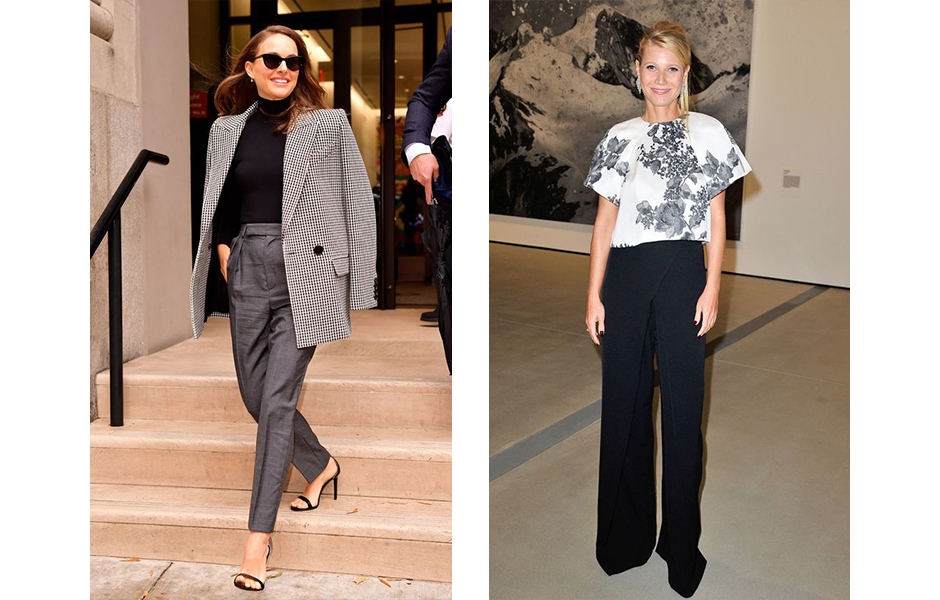
The strongest move is contrasting textures: a smooth bottom with a voluminous top, or the other way around. A small, uniform print across the whole figure, on the other hand, flattens the silhouette.
Three Looks That Work
Everyday. An oversized shirt tucked in at the front, high-rise jeans, a thin belt.
For work. A ruffled blouse, a midi circle skirt, pumps.
For an evening out. A dress with a cut waistline or a peplum.
Frequently Asked Questions
How do you create a waist if there isn't one? Don't create it — mark it: a high waistline, a belt, a cut seam, a tucked-in top.
Can you wear a straight-cut dress? Yes — with a belt or an open cardigan draped over it to add a vertical line.
What about mini skirts? That's this body type's strength: the legs are usually slim, so minis can be worn with almost no restrictions.