Working from home has erased one of the oldest unspoken agreements between clothing and space: we used to change outfits along with our mode of the day. One look for the workday, another for evening, another for home. Today you can run a call from the kitchen, close the laptop, and step out for coffee five minutes later in the same outfit.
Along with that, the role of clothing has changed too. It no longer has to reproduce an office dress code inside an apartment, but ordinary loungewear doesn't always match the rhythm of a workday either. What's needed is a third category — pieces that stay comfortable at home while keeping their composure when the day extends past the laptop.
When home still had its own dress code
The idea of dedicated at-home clothing is hardly new. On the contrary, in the 19th and early 20th centuries, the home wardrobe could be surprisingly elaborate and carefully thought out.
In the Victorian era there were morning gowns, house dresses, and tea gowns — garments created for specific domestic scenarios. A morning gown might be intended for breakfast with the family, correspondence, or light housework, while a tea gown was for afternoon tea and receiving guests.
And here lies an interesting paradox: at-home clothing was by no means synonymous with carelessness. A tea gown could be made of silk, with an intricate cut, refined trimmings, and an expressive silhouette. It offered enough comfort for staying home, yet was polished enough to welcome guests.
So even back then, at-home clothing had its own social code. It was never simply "what you wear when you're not going anywhere." That's an important detail for understanding today's trends.
From the housedress to pajama bottoms on Zoom
For most of the 20th century, clothing remained tied to place. We went to work — and dressed for it; we came home — and changed; we went to a restaurant or the theater — and changed again.
Changing clothes was a small ritual of transition.
The pandemic dismantled that order almost comically at first. Video calls let us attend a work meeting without leaving the apartment, while the camera only saw the top half of the look. That's how an almost farcical new dress code was born: a shirt or blazer in frame — and anything at all below it.
But behind that joke was something more significant. We suddenly started dressing not for a space, but for an interface.
The camera decided which part of our look others would see. And everything outside the frame seemed to stop mattering.
Today that phase is already behind us. Remote work has stopped being the exception, and with it, our relationship to clothing has changed too.
Now what matters isn't only how you look on a video call. It's what happens to your look once the camera turns off.
A third space that didn't exist before
Working from home has created a strange hybrid environment. It's no longer quite home, yet it hasn't become an office either.
You can be on a call with someone hundreds of kilometers away, then switch to a completely mundane task ten minutes later. Work time and personal time overlap without the physical space ever changing.
This is a kind of third space — between the personal and the professional. And the wardrobe for it needs to be hybrid too.
Not office wear in the traditional sense, and not purely loungewear either. Its job is to support the day's different modes without forcing you to start each one with a change of clothes.
This is where a new logic emerges: clothing no longer has to be tied to a place. It can be tied to a scenario instead.
Soft structure instead of office armor
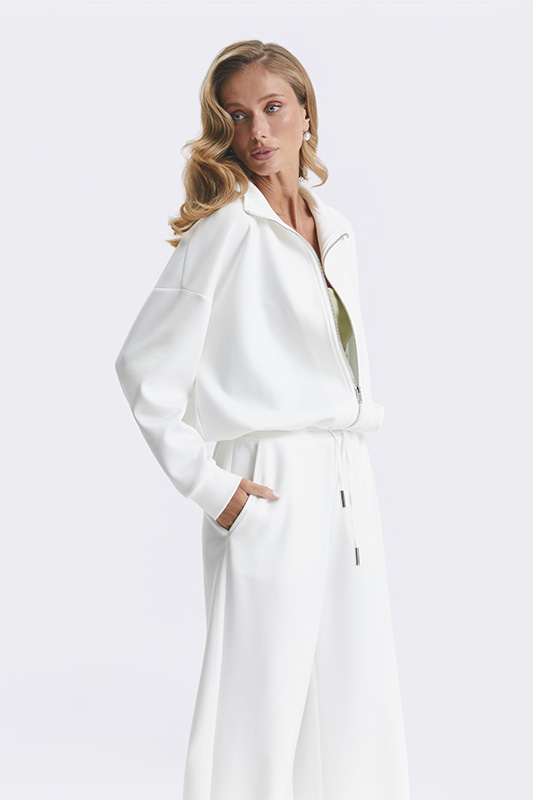
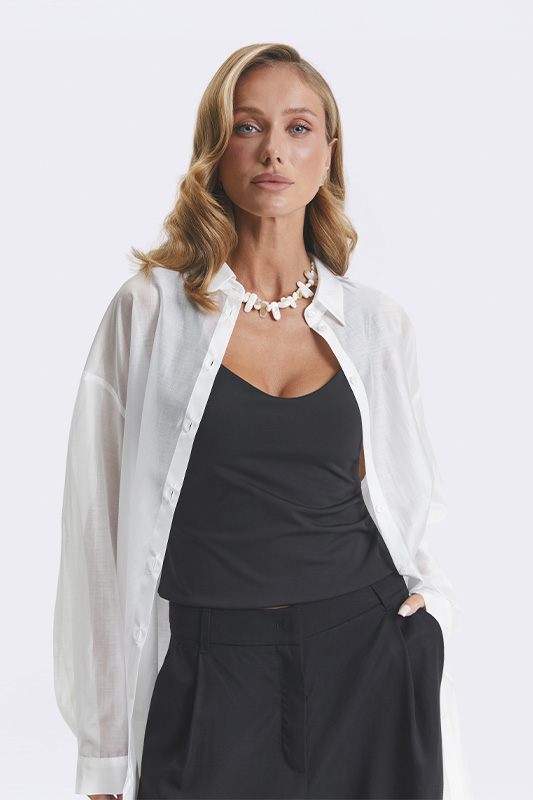
One of the most interesting categories for this kind of wardrobe is soft structure.
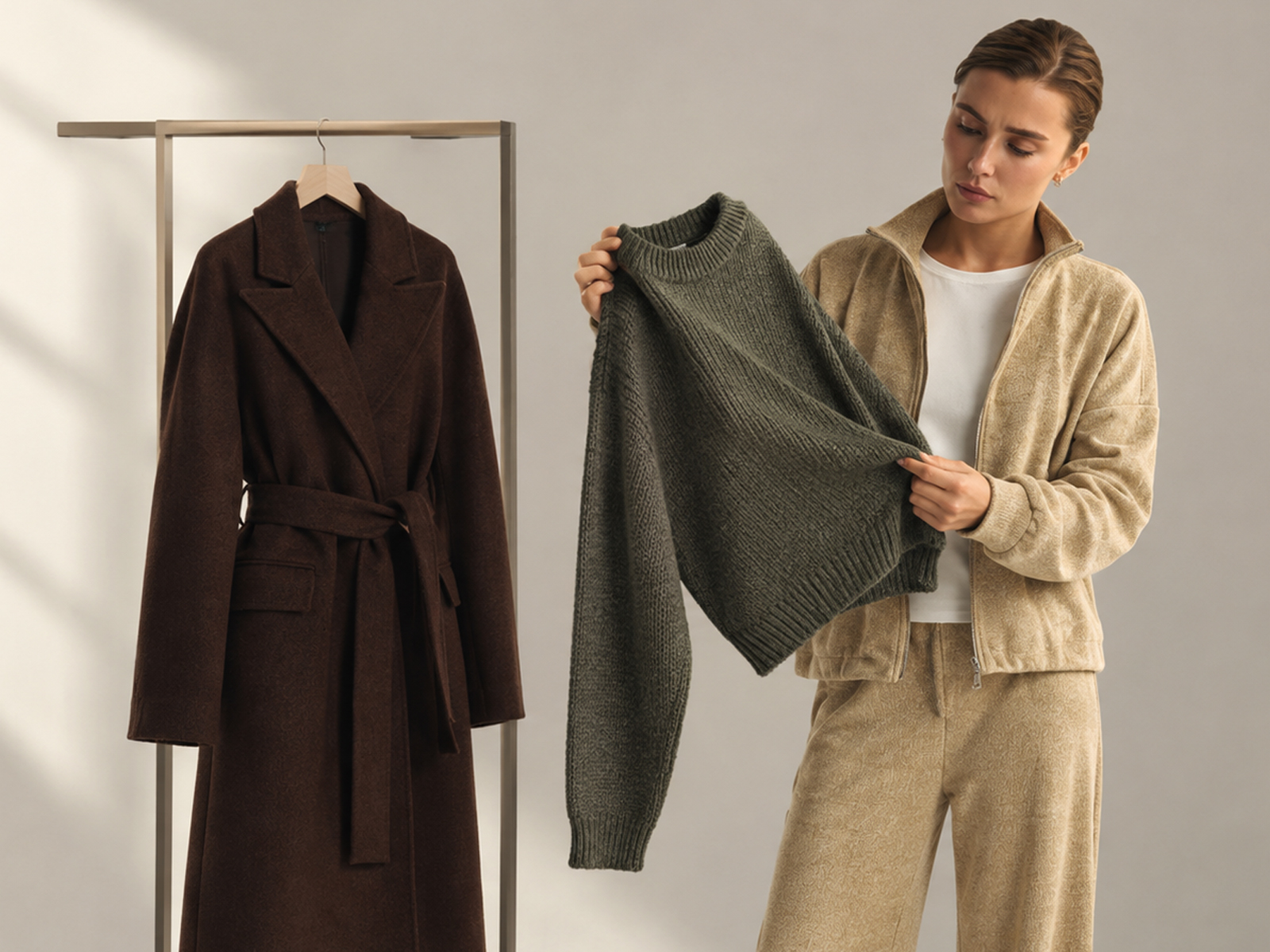
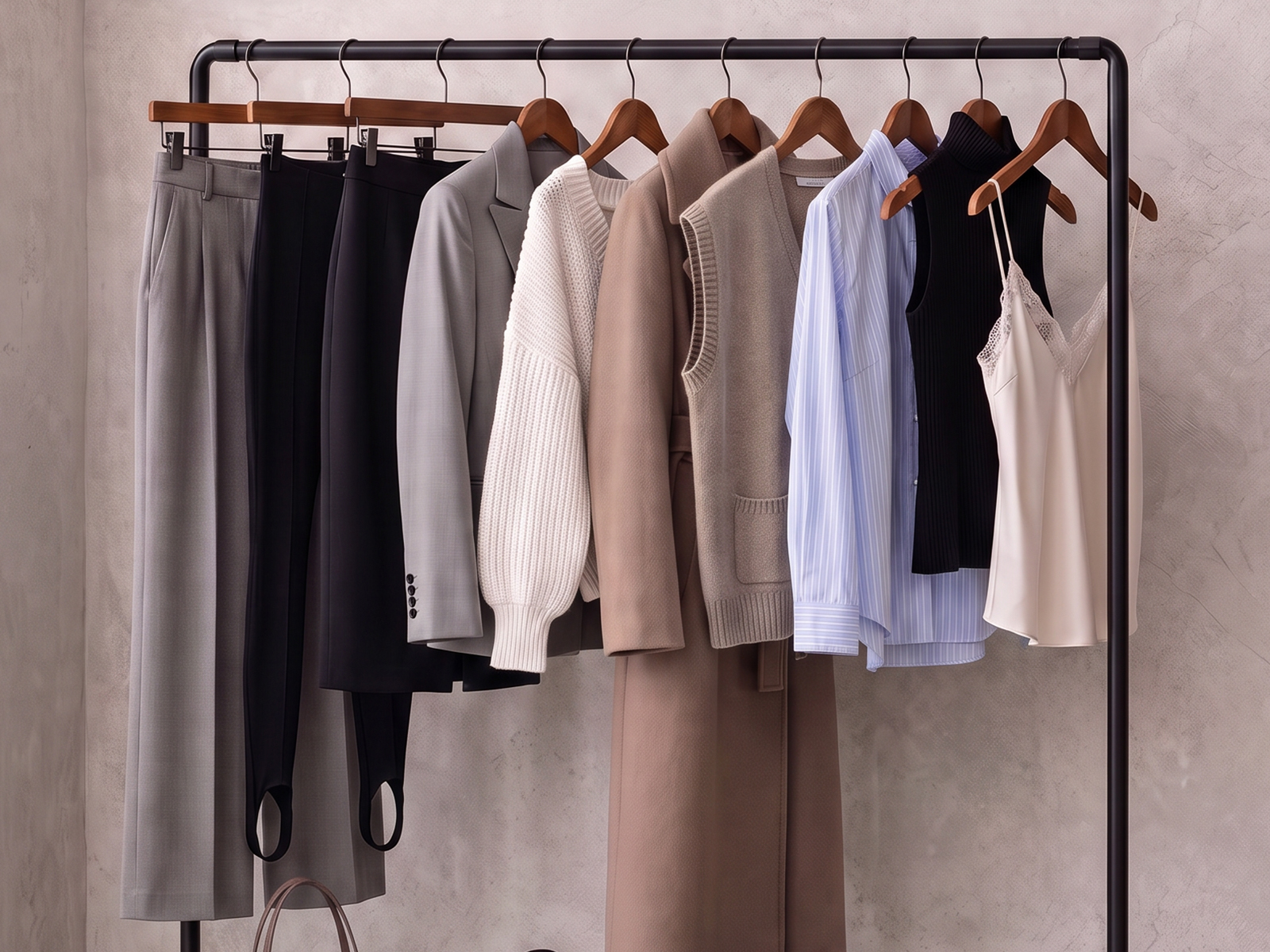
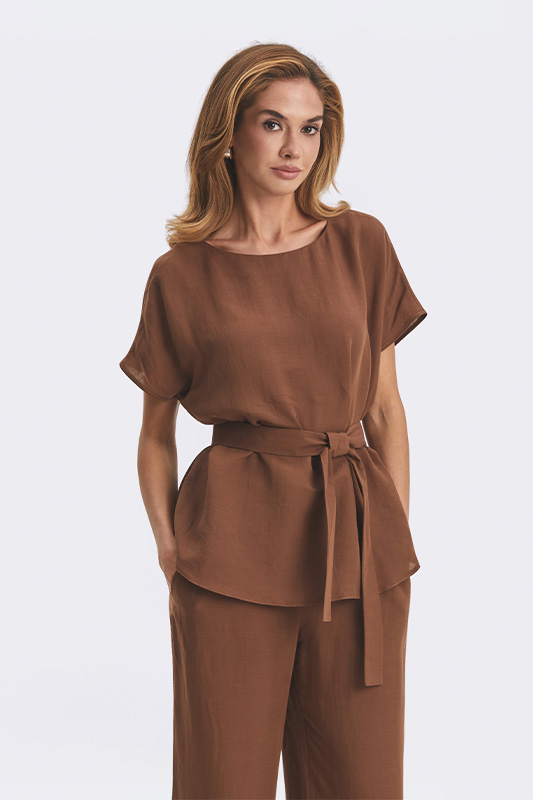
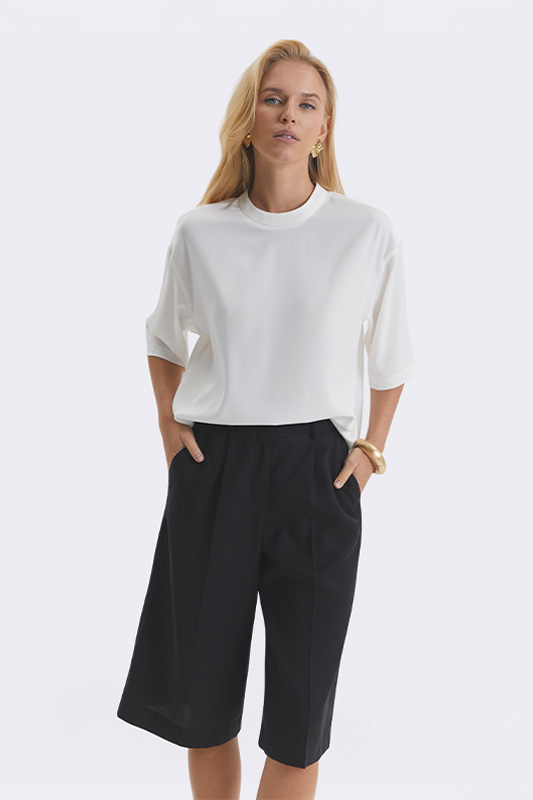
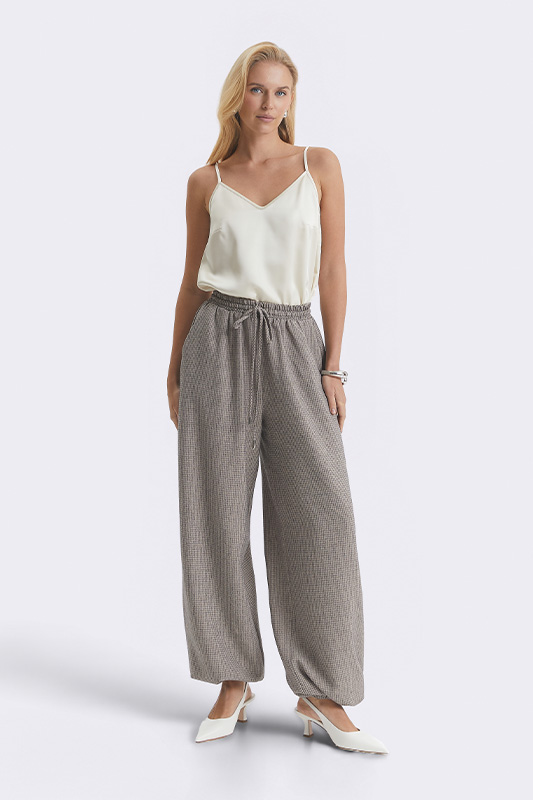
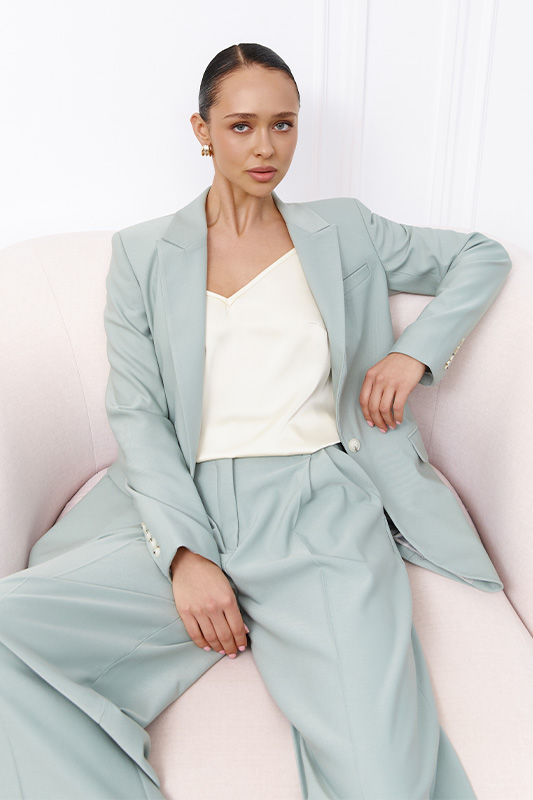
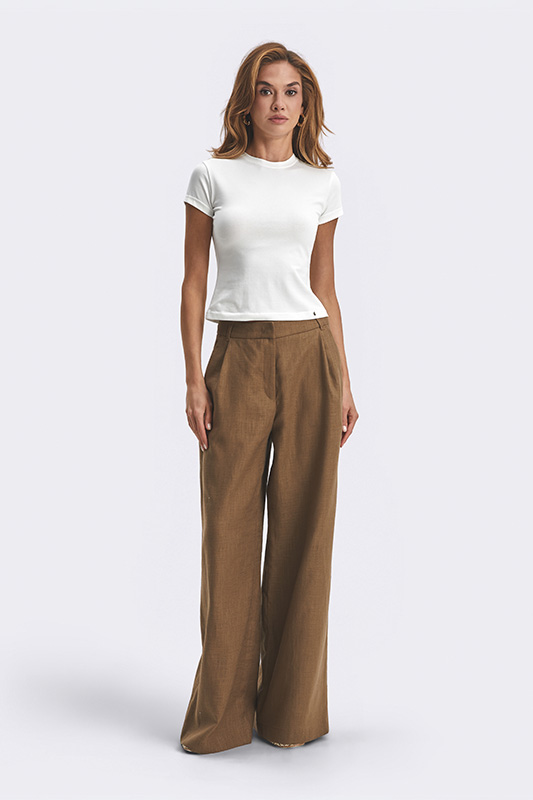
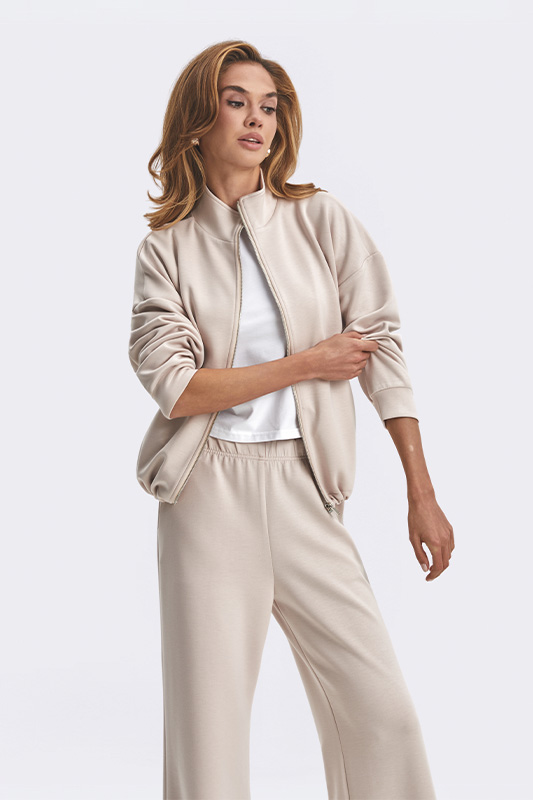
The piece has shape but is barely felt. A blazer can be made of a soft fabric with a looser construction, a shirt can be a little more relaxed, trousers can be straight or wide while still holding the silhouette.
This isn't about making office clothing more comfortable for home. It's more about finding a different point of balance: pieces can be composed without being rigid.
As for the nuances of how clothing performs on camera during an important meeting specifically, we covered that in detail in the article "Dress Code for Video Calls."

A piece with a double life
There's a simple test for the pieces we choose for working from home: what happens to this piece the moment I close the laptop?
If the look immediately loses meaning once work is done, its function is fairly narrow. What's more interesting are pieces that naturally stay with you even after the last call.
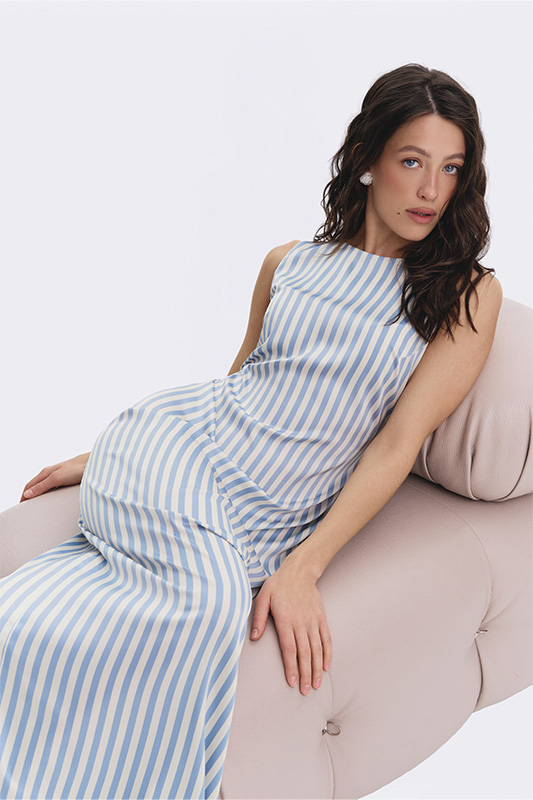
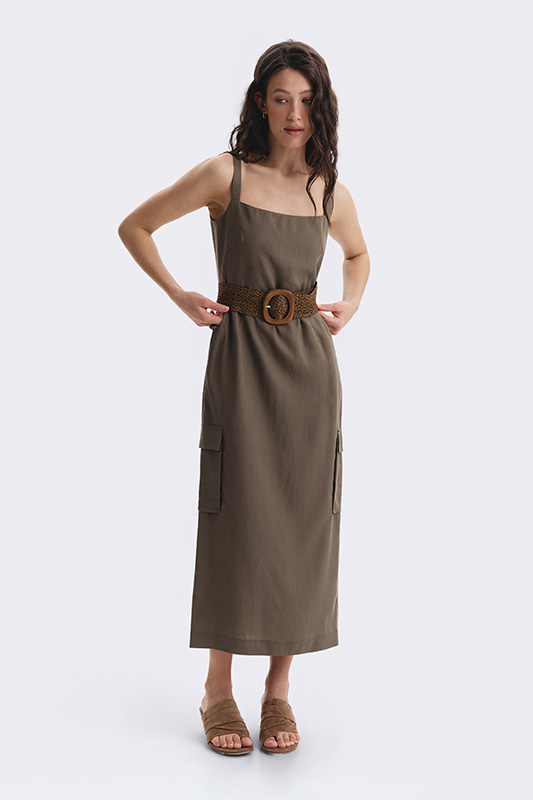
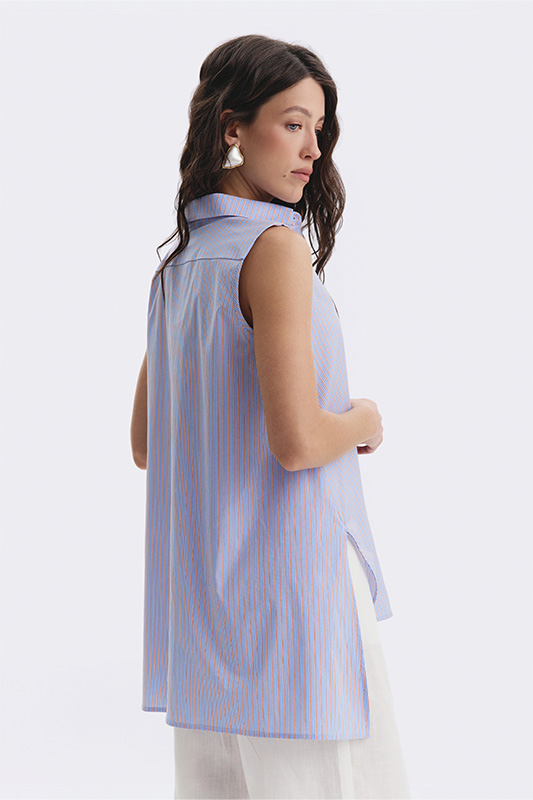
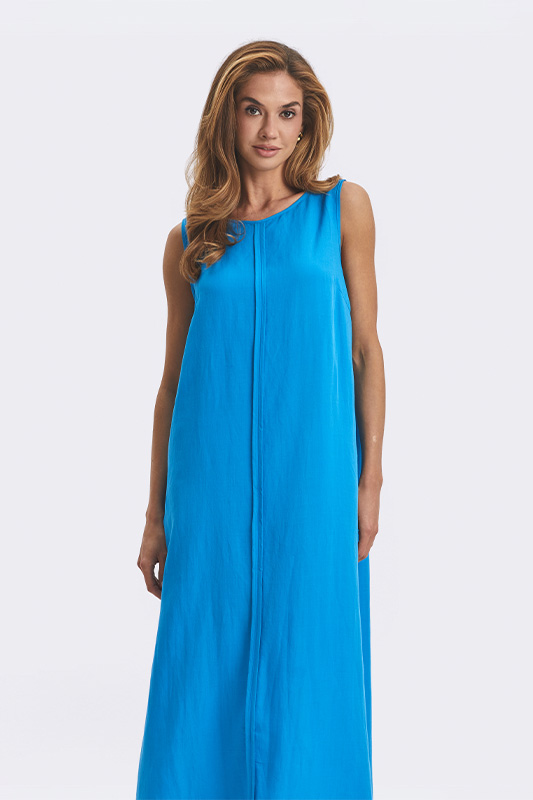
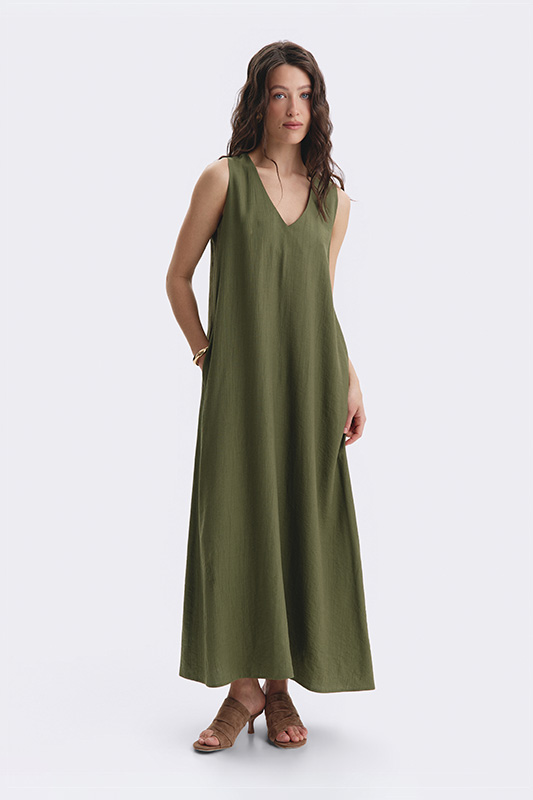
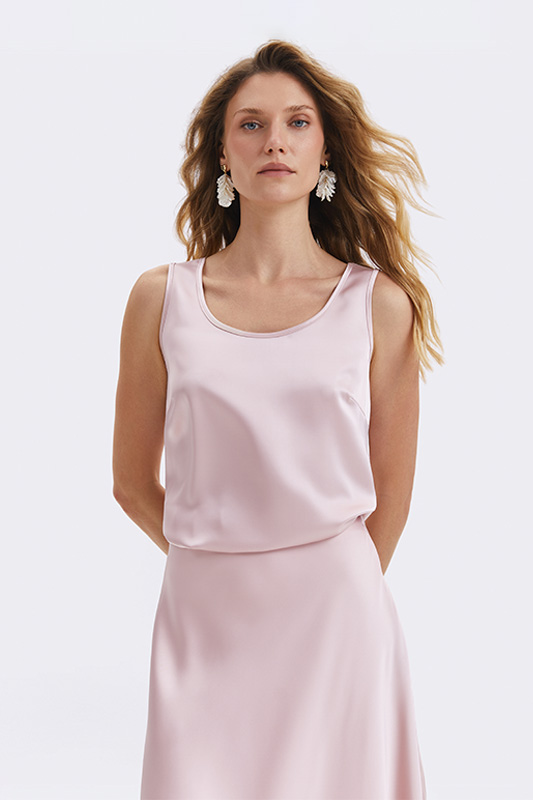
It could be a dress that's just as easy to spend hours at the laptop in as it is to step outside in, or a shirt that works both in and out of a work look. What matters isn't the specific item, but its ability to shift context along with you.
This is no longer just versatility. It's a piece's capacity to lead a double life.
A wardrobe that cuts down on decisions
There's another reason simple, well-thought-out combinations work especially well for working from home.
Over the course of a day you already have plenty of decisions to make: what's more important today, who to reply to first, which meeting to reschedule, when to take a break.
Your wardrobe shouldn't be adding one more difficult task to that list.
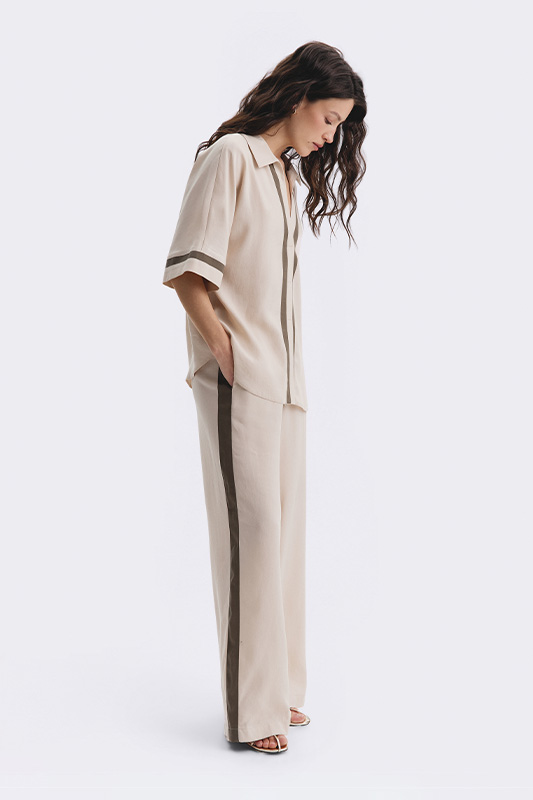
So instead of endlessly searching for new looks, you can build a few personal formulas: a base + one structured piece + a personal detail. A system like this leaves room for color, texture, and mood, while removing the need to start from scratch every morning.
A formula doesn't mean monotony. It means your wardrobe already knows what your workday needs.
A good work-from-home wardrobe doesn't multiply your options. It makes choosing easier.
What to check in your wardrobe today
You don't have to start with new pieces. It's worth first taking a closer look at what you already own.
Try evaluating them not by "is this office wear or home wear?" but by asking different questions.
Can this piece work across different contexts? If it only handles a single function well, its role in your wardrobe may be too narrow.
Does it pair easily with other pieces? A piece that requires an elaborate build-around quickly becomes dependent on one specific look.
Does it help you switch gears? Sometimes a single detail is enough — one that, for you personally, signals the start of work mode.
And finally: do you want to stay in this outfit after work?
If the answer is yes, you've found pieces that match the core principle of this kind of wardrobe: they don't belong to a single scenario — they stay relevant throughout the day.
When the camera turns off
Perhaps this is where the main difference between working from home and working from an office lies.
In an office, the space itself tells us we're there to work. At home, that signal has to be created on your own — and clothing can be one of the simplest ways to do it.
But a good work-from-home wardrobe doesn't try to turn an apartment into an office. It leaves room in it for life.
And perhaps this is exactly where we return to the old idea of at-home clothing, just in a different form. The tea gown once let you stay home while still being ready for social life. Today we need pieces that let us stay home while being ready for work, the city, a meeting, or an evening out.
The wardrobe has settled naturally into a world where the boundaries have blurred. Because when the camera turns off, work doesn't end — and life shouldn't have to wait.